Garage Door Spring Types: Torsion vs. Extension Explained (2026 Guide)
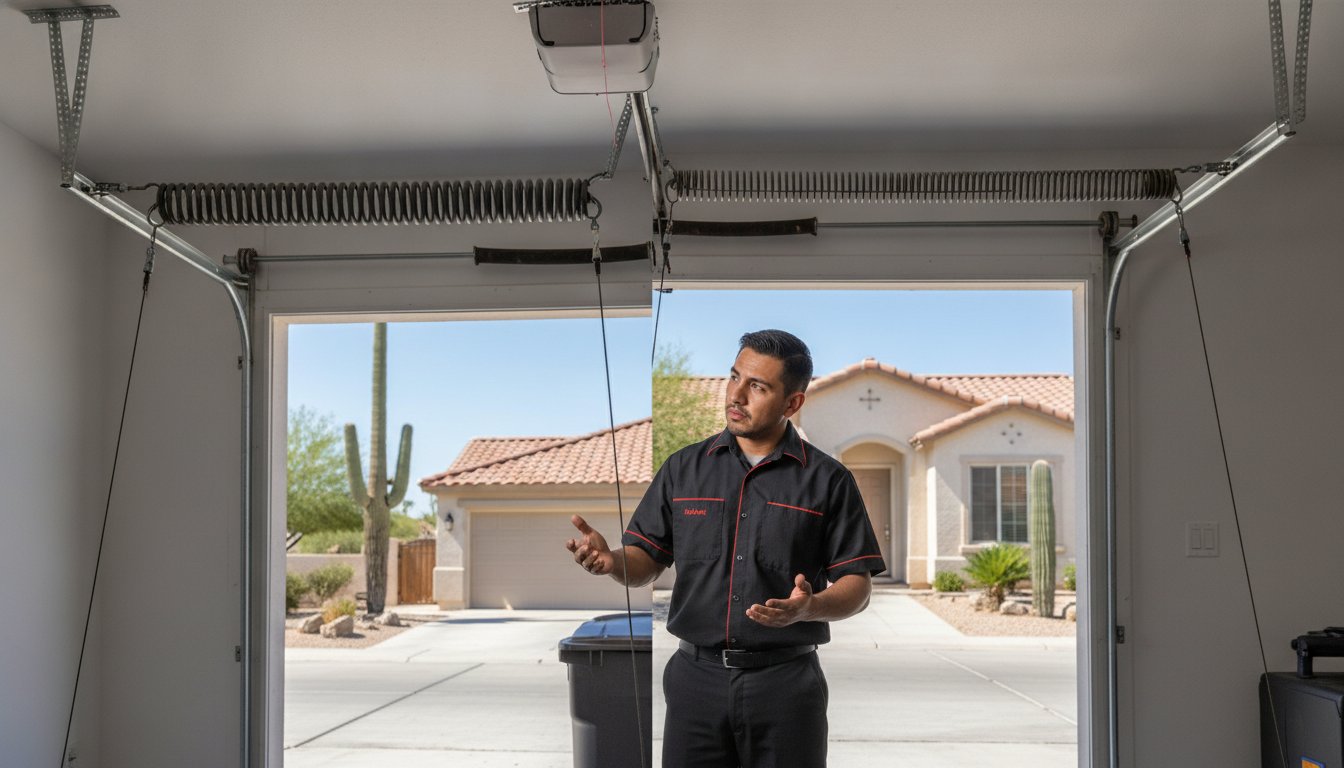
Did you know that approximately 30,000 people are injured by garage doors every year in the United States? Most homeowners don't realize that the heavy lifting isn't actually done by the motor. Instead, it is handled by high-tension springs that can become dangerous projectiles if they snap. Understanding the different garage door spring types torsion extension systems use is the first step in keeping your family safe. It's natural to feel anxious when you hear a loud bang from the garage or notice your door feels unusually heavy. You deserve a reliable door without the constant fear of it falling or the stress of being overcharged for repairs.
We know how frustrating it is to deal with conflicting advice on how long your hardware should actually last. This guide will help you master the differences between torsion and extension springs so you can make the most cost-effective choice for your home. We will show you how to identify your existing setup and why torsion systems offer superior safety and durability. By the end, you will know exactly how to spot the signs of a failing spring and when it's time to call for a professional emergency repair.
Key Takeaways
- Understand that your springs, not the opener, perform the actual heavy lifting, making their condition critical for safe daily operation.
- Identify the different garage door spring types torsion extension systems by checking if your hardware is mounted above the door or along the horizontal tracks.
- Discover why torsion springs are the modern residential standard, typically offering a longer lifespan and enhanced safety for your family.
- Spot early warning signs of failure like visible gaps in the coils or a door that feels unusually heavy when opened manually.
- Recognize when a loud bang or stuck door requires immediate professional attention to avoid the high-stakes risks of DIY spring replacement.
Understanding the Role of Garage Door Springs in Your Home
Your garage door is likely the largest and heaviest moving object in your home. While the electric opener gets all the credit for that smooth movement, it is actually the springs doing the grueling work. A typical residential door weighs anywhere from 150 to over 300 lbs. Lifting that much weight takes massive power. Understanding the Role of Garage Door Springs is vital because these components act as the system's muscles. They store energy while the door is closed and release it to assist the lift.
The electric opener acts more like a guide, directing the door's travel along the tracks. Without functional springs, the opener's motor would burn out almost instantly trying to move that dead weight. This high-stakes environment is why knowing the primary garage door spring types torsion extension systems is so important for every homeowner. Because these springs hold so much tension, they are dangerous if they snap or are handled by someone without the proper tools.
To better understand this concept, watch this helpful video:
How Counterbalance Systems Work
Springs operate as a counterbalance system designed to offset the gravitational pull on your door. When a technician installs your springs, they apply a specific amount of tension based on the door's exact weight. This creates a state of equilibrium. In a perfectly balanced system, you should be able to lift the door halfway by hand and have it stay in place without sliding down or snapping up. If the door feels heavy or slams shut, your counterbalance system is failing. This imbalance is a primary cause of Garage Door Repair calls and should be addressed immediately to prevent injury.
Why Spring Maintenance Cannot Be Ignored
Every time you open and close your door, the metal coils in your springs undergo intense stress. This is known as a cycle. Most standard residential springs are rated for approximately 10,000 cycles. Depending on how often you leave and return home, this usually translates to a lifespan of 7 to 10 years. Eventually, metal fatigue is inevitable. If you ignore signs of wear, the spring will eventually snap, often with a sound like a gunshot. This sudden failure puts massive strain on the rest of the hardware and can even damage the opener's internal gears, leading to much higher replacement costs.
Torsion Springs: The Modern Standard for Reliability
When you look at the different garage door spring types torsion extension systems offer, the torsion spring stands out as the industry favorite for a reason. These springs are mounted on a solid metal shaft located directly above the door opening. Unlike other systems that stretch and contract, torsion springs operate using a winding mechanism. They store energy through torque, which is a twisting force. This design allows them to handle significantly more weight, making them the ideal choice for heavy wooden doors or wide double-car garages.
One of the most critical advantages of a torsion system is safety. Because these springs are threaded onto a steel shaft, they stay exactly where they are even if they snap. This prevents dangerous pieces of metal from flying across your garage and causing injury or property damage. However, the tension involved is still extreme. Because these springs store massive amounts of energy, you must Manage Repairs Safely to avoid struck-by hazards documented by safety officials. If you aren't sure which torsion system fits your door, getting a professional Garage Door Spring Repair assessment is the smartest way to ensure long-term reliability.
Common Sub-Types of Torsion Springs
- Standard Torsion Springs: These are the most common springs found in residential homes. Most single-spring setups use one, while larger doors use a pair for balanced lifting.
- Early Bird Torsion Springs: Technicians install these in garages with low headroom. They are specifically designed to fit in tight spaces where a standard shaft wouldn't have enough clearance.
- TorqueMaster Systems: These springs are enclosed inside the metal shaft itself. This protects the spring from dust and provides a cleaner aesthetic, though they often require specialized parts for repair.
The Mechanical Advantage of Torsion
The secret to the torsion spring's performance lies in the shaft and drum system. As the spring unwinds, it turns the shaft, which rotates drums located at each end. These drums wind up the lifting cables evenly on both sides. This synchronized movement ensures your door stays perfectly level as it travels, which prevents the rollers from binding in the tracks. It results in a much smoother and quieter operation compared to older stretching systems.
Homeowners who use their garage as the primary entrance to their home often choose "high-cycle" torsion upgrades. While a standard spring might last for 10,000 cycles, high-cycle versions use thicker wire and larger diameters to reach 25,000 or even 50,000 cycles. This reduces the frequency of repairs and provides better long-term value. With fewer moving parts than traditional setups, torsion systems remain the most dependable way to manage a heavy residential door.
Extension Springs: Understanding the Traditional Counterbalance System
While torsion systems are the modern standard, many homes still rely on extension springs. These components are easy to spot because they run parallel to the horizontal tracks on both sides of the door. Unlike the winding motion of a torsion system, these springs use a stretching mechanism to lift the weight. As the door closes, the springs expand to store energy. When you open the door, that tension contracts and pulls the door upward. You will often find these in older Phoenix homes or in budget-friendly new builds where cost was the primary concern during construction.
The main issue with this design is the lack of synchronized movement. Because each side has its own independent spring, they rarely wear out at the same rate. This often leads to a "jerky" or uneven movement as the door travels along the tracks. If one spring becomes weaker than the other, the door can tilt, causing the rollers to bind and potentially damaging the track. If you notice your door shaking or moving at an angle, it's time to look for Garage Door Repair Near Me to prevent a total system failure. Understanding the different garage door spring types torsion extension setups helps you realize why this uneven wear happens over time.
Identifying Extension Spring Varieties
- Clipped-End Springs: These are the most durable extension options. They feature reinforced metal clips at the ends that distribute the load more effectively, reducing the risk of the loop snapping.
- Double-Looped End Springs: This is the standard residential design. It features two coils bent into a loop at the end, providing a more secure connection than a single loop.
- Single-Looped End Springs: These are the most common but least durable connection type. The single loop is prone to metal fatigue and is often the first point of failure in a budget installation.
The Importance of Safety Cables
Because extension springs stretch with massive tension, they are incredibly dangerous if they snap. Without a safety feature, a broken spring can fly across the garage like a projectile, shattering windows or causing severe injury. This is why safety cables are non-negotiable. These cables run through the center of the spring and are anchored to the track support. If the spring breaks, the cable keeps the metal pieces contained. Many older homes in the valley still lack these essential safety features, leaving families at risk. Safety cables are the last line of defense against property damage.
Maintain your peace of mind by checking your tracks today. If you see springs without a cable running through the middle, call a technician immediately. Upgrading to a safer system or simply adding cables is a fast way to protect your home and vehicles from sudden mechanical failure.
Torsion vs. Extension Springs: Which System Is Best for Your Home?
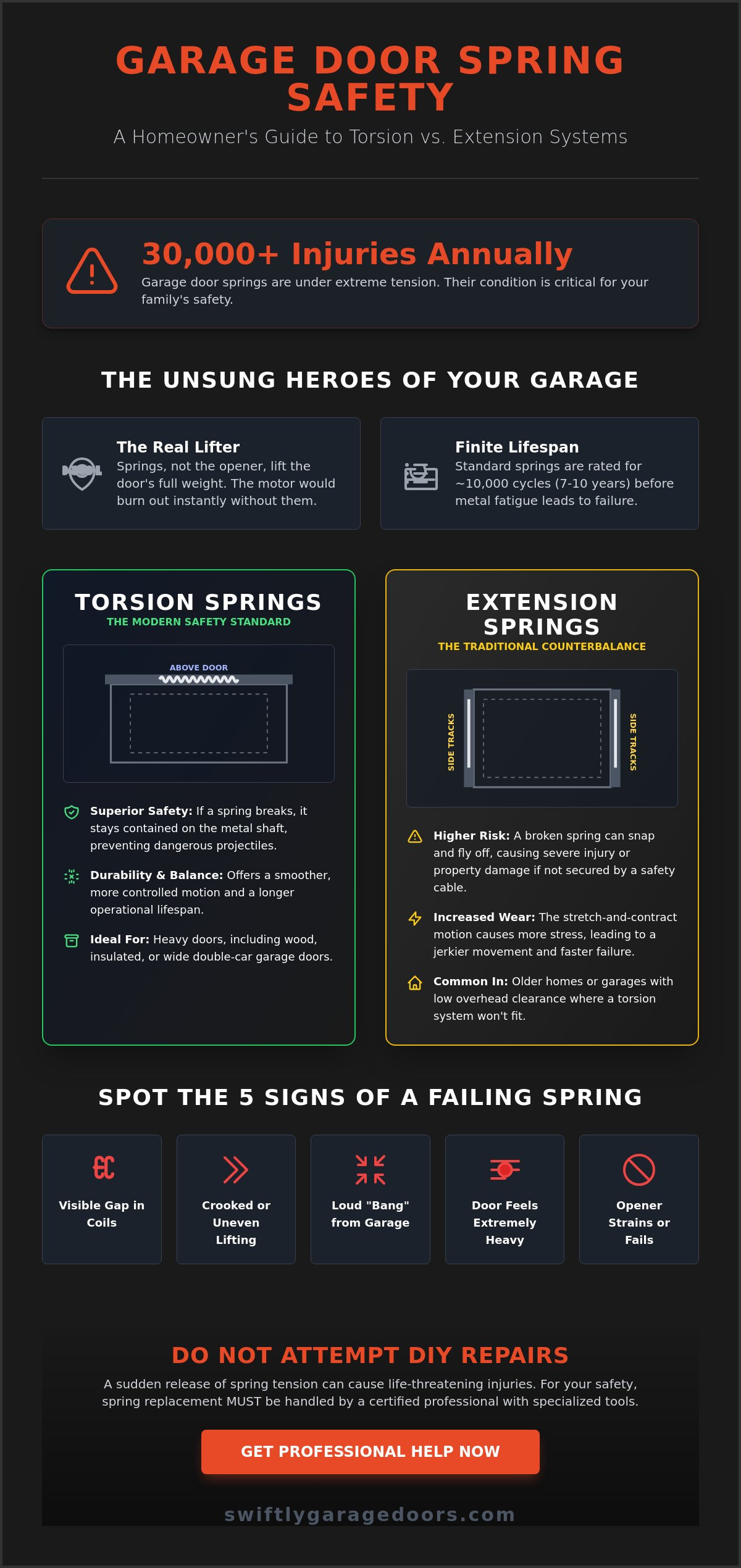
Choosing between garage door spring types torsion extension systems often comes down to balancing your immediate budget with long-term safety. Torsion springs generally provide a lifespan of 10,000 to 20,000 cycles. Compare this to extension springs, which usually offer only 5,000 to 10,000 cycles. While torsion hardware costs more upfront, the extended durability means you won't be calling for repairs nearly as often. Over a ten-year period, an extension system might require two full replacements while a high-quality torsion spring is still going strong. This makes torsion the more cost-effective choice for long-term homeowners.
Torsion systems are also significantly quieter. This is a major factor if you have a bedroom located directly above or next to an attached garage. The smooth winding motion eliminates the loud "twang" often heard with stretching springs. However, extension springs serve a specific purpose in tight spaces. Standard torsion systems require about 12 inches of space above the door header. If your garage was built with a very low ceiling, extension springs might be the only physical option that fits the available headroom. Even then, low-headroom torsion kits are an available alternative for those who want the safety of torsion without the clearance issues.
Safety and Liability Considerations
Insurance companies and industry professionals almost always prefer torsion systems. The reason is simple; it comes down to liability. Extension systems rely on a complex network of pulleys and extra cables. This added hardware creates more friction points where wear can occur. If a pulley fails, it can cause the door to crash down unexpectedly or send the spring flying. For any immediate safety concerns or if your door is currently stuck, you should contact emergency garage door repair Phoenix specialists to secure your home.
Performance in the Arizona Climate
The intense Phoenix heat plays a huge role in how your hardware performs. High temperatures can cause lubrication to dry out quickly, leading to metal expansion and increased friction. Torsion springs are naturally more resilient to this temperature-induced fatigue because they distribute stress more evenly across the entire metal coil. For homeowners in Peoria or Scottsdale who use their garage multiple times a day, we often suggest high-cycle galvanized springs. These are specially treated to resist corrosion and handle the high-usage demands of a busy Arizona household.
If you're ready to upgrade your system for better safety and performance, schedule a New Garage Door Installation consultation to see which setup fits your garage best.
How to Identify Your Spring Type and Manage Repairs Safely
Identifying your system is the first step toward a fast resolution. In our extreme Arizona climate, metal components expand and contract aggressively. This thermal stress accelerates metal fatigue, making spring failure common in the valley. To check your setup, stand inside your garage with the door closed and look at the hardware. Understanding the differences between garage door spring types torsion extension systems allows you to give our technicians the right information for a faster fix. Identifying the hardware correctly ensures we arrive with the exact parts needed for your specific door weight.
Visual Identification Guide
- The Torsion Shaft: Look for a thick metal bar running horizontally directly above the door header. The springs are wound tightly around this shaft.
- Horizontal Track Mounts: Check for long, thin springs stretching back into the garage parallel to the upper tracks. These are extension springs.
- Enclosed Systems: If you see a metal tube above the door but no visible coils, you likely have a TorqueMaster system where the springs are hidden inside the shaft.
If you discover a visible two-inch gap in the coils or heard a sound like a gunshot earlier, your spring has snapped. A door with a broken spring feels incredibly heavy because the counterbalance is gone. Don't attempt to adjust these components yourself. The high tension is enough to cause severe injury or property damage. Our "Swiftly" approach prioritizes your peace of mind through transparent diagnostics and same-day service. We focus on getting your door back in motion safely without the high-pressure sales tactics common in the industry.
Next Steps for a Broken Spring
Follow this checklist to manage the situation safely until help arrives:
- Step 1: Stop using the electric opener immediately. Trying to force the door open will burn out the motor gears.
- Step 2: Keep children and pets away from the garage area to avoid accidents with a heavy, unstable door.
- Step 3: Call a garage door spring repair Phoenix expert for a safe, professional replacement.
- Step 4: Ask about upgrading to a high-cycle torsion system. These are more resilient to the intense heat in Phoenix and Peoria, providing much better long-term value.
When you call for a Broken Garage Door Repair, tell the technician if you have a single or double-car door. This helps us prepare the correct spring wire size before we even pull into your driveway. We are here to provide the dependable, no-nonsense service you need to get your day back on track.
Secure Your Home with the Right Spring System
You now have the knowledge to distinguish between the primary garage door spring types torsion extension systems use and why torsion hardware is the industry standard for safety. While extension springs offer a budget-friendly entry point, they require safety cables and more frequent maintenance to prevent jerky movement. Torsion springs provide a smoother, quieter experience and better protection against flying metal if a break occurs. Don't leave your family's safety to chance by attempting a DIY fix on these high-tension components.
If you're dealing with a snapped coil or a door that won't budge, we're ready to help. Get Same-Day Garage Door Spring Repair in Phoenix; Call Swiftly Now! We provide 24/7 emergency assistance for broken springs along with transparent estimates and honest diagnostics. Our team specializes in high-cycle torsion spring upgrades to ensure your door stands up to the Arizona heat for years to come. We value your time and respect your property, providing the reliable local expertise you can trust. Your peace of mind is our priority, and we are just a phone call away.
Frequently Asked Questions
Can I replace my own garage door springs if I am handy?
You should never attempt to replace garage door springs yourself. These components are under extreme tension and can cause severe injury if they snap during handling. Professional technicians use specialized winding bars and safety equipment to manage the high pressure safely. Trying a DIY repair puts your property and your family at unnecessary risk for a job that requires expert precision.
How long do garage door springs typically last in the Phoenix heat?
Most springs last between seven and ten years in the Arizona climate. The intense Phoenix heat can dry out metal lubrication faster than in cooler regions, which leads to increased friction and metal fatigue. We typically see standard springs fail after about 10,000 cycles. If you use your garage as your primary home entrance, you might reach this limit even sooner than expected.
Is it possible to convert extension springs to a torsion spring system?
Yes, converting from extension to torsion is a highly recommended upgrade for many homeowners. This process involves installing a new shaft, drums, and springs above the door header. It is a smart move if you want a quieter, more balanced door. Mastering the different garage door spring types torsion extension setups allows us to perform this conversion quickly to improve your home's safety profile.
Why did my garage door spring make a loud bang when it broke?
The loud bang you heard was the sudden release of several hundred pounds of stored energy. When the metal coil finally reaches its fatigue limit and snaps, that tension is discharged instantly. This sound is often mistaken for a gunshot or something heavy falling in the garage. It is a clear signal that your counterbalance system has failed and needs immediate professional attention to secure the door.
Should I replace both garage door springs if only one is broken?
You should always replace both springs at the same time. Because both springs were installed together, they have completed the same number of open and close cycles. If one has snapped, the other is likely just days or weeks away from failing as well. Replacing them as a pair ensures your door stays balanced and saves you from paying for a second service call later.
How much does it cost to fix a broken garage door spring in Phoenix?
The cost of a spring repair depends on the specific weight of your door and the type of hardware required. Replacing a torsion spring on a heavy wooden door involves different parts than a light aluminum one. We provide transparent diagnostics and honest estimates after inspecting your system. This ensures you pay for exactly what you need without any hidden fees or high pressure sales tactics.
What happens if I try to open my garage door with a broken spring?
Using your electric opener with a broken spring will likely burn out the motor. Without the springs to lift the weight, the opener's gears are forced to move hundreds of pounds of dead weight they weren't designed to handle. You also risk snapping the lifting cables or causing the door to come off its tracks. It is much safer to leave the door closed until a technician arrives.
Are torsion springs safer than extension springs for families with children?
Torsion springs are significantly safer for families with children and pets. Because the spring is threaded onto a solid metal shaft, it stays contained even if it breaks. In contrast, extension springs can fly across the garage if they snap without safety cables. When choosing between garage door spring types torsion extension, torsion is the modern standard for those prioritizing maximum household safety and peace of mind.