Insulated Garage Door Installation Phoenix: The 2026 Guide to Beating the Heat
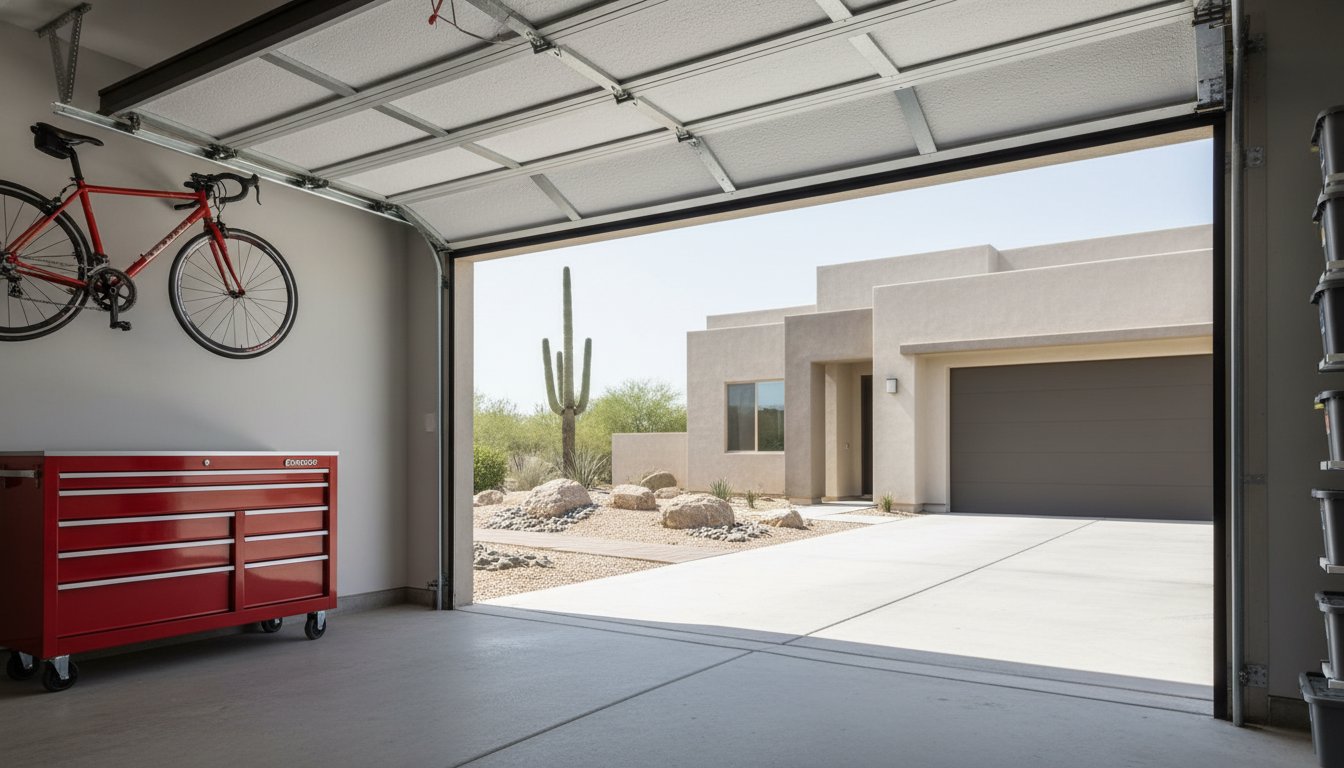
Did you know that when it hits 110°F on a typical July afternoon in Phoenix, the temperature inside an uninsulated garage can soar past 130°F? It isn't just a storage space anymore. It's a giant heat sink that forces your home's AC to work overtime. You likely notice your cooling unit struggling to keep the rooms next to the garage comfortable, and those monthly SRP or APS bills reflect the extra effort. It’s frustrating to pay for energy that’s literally leaking through a thin sheet of metal.
We agree that your home should be a sanctuary from the desert heat, not a furnace. That's why professional insulated garage door installation Phoenix is a critical thermal barrier strategy rather than just a luxury upgrade. By choosing the right materials, you can finally reclaim your garage space and protect your home's efficiency. This guide explores how the right insulation helps lower that $212 average monthly electric bill and which R-values stand up to Arizona's extreme climate. We will also look at navigating HOA rules and why a quieter, more durable door system is the best defense against monsoon winds.
Key Takeaways
- Learn why standard steel doors act like a "radiant oven" and how a thermal barrier stops heat from transferring into your living space.
- Discover why professional insulated garage door installation Phoenix is one of the most effective ways to lower your summer SRP or APS bills.
- Compare polyurethane and polystyrene insulation to find the best R-value for blocking out the 110°+ desert sun.
- Understand the technical side of upgrades, including why your door's springs need professional recalibration to handle the extra weight of insulation.
- Find out how an insulated system creates a quieter home by dampening neighborhood traffic and heavy monsoon winds.
Why Standard Garage Doors Fail in the Phoenix Summer Heat
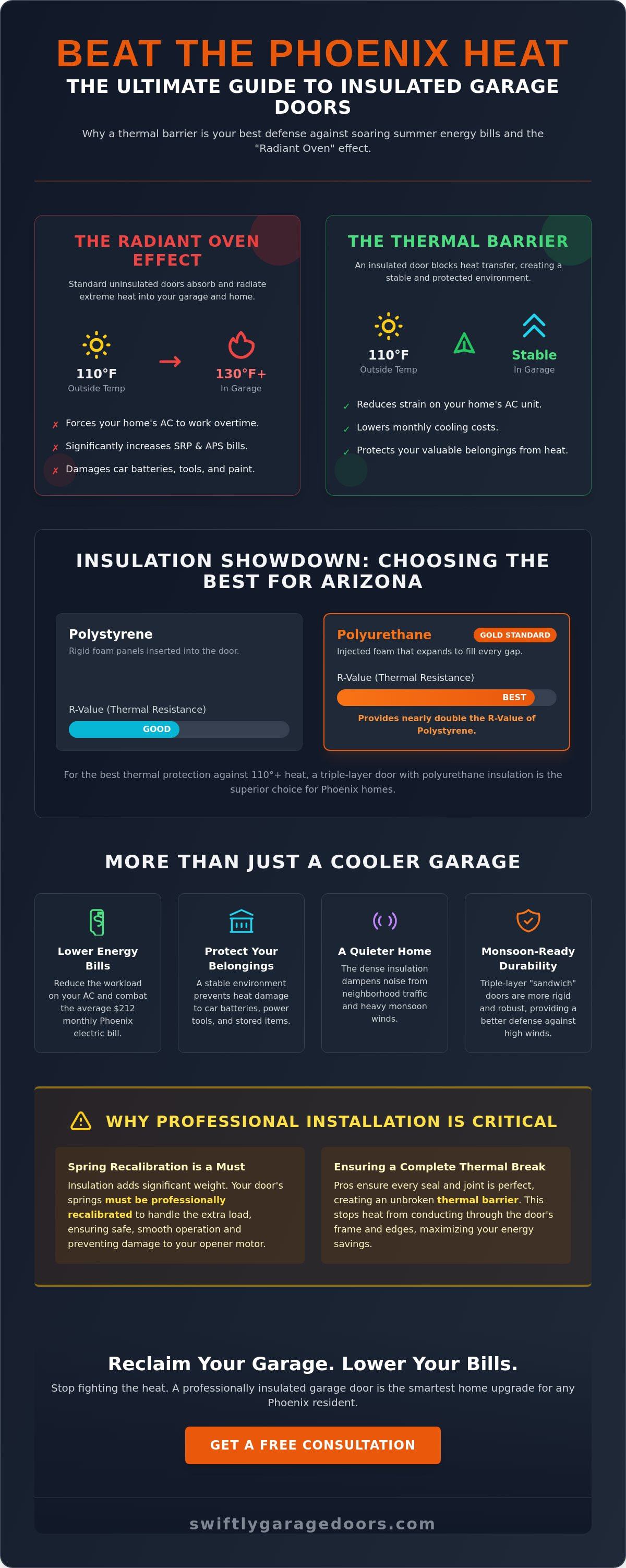
On a 110°F day in the Valley, your garage door isn't just a physical barrier; it's a giant radiator. Standard uninsulated steel doors are highly conductive. They absorb the relentless desert sun and can reach surface temperatures of 150°F by mid-afternoon. This creates what we call the "Radiant Oven Effect." Instead of keeping the heat out, the metal panels soak up energy and beam it directly into your garage. This space quickly becomes a pocket of stagnant, 130°F air that presses against the interior walls of your home.
This heat doesn't stay in the garage. It moves into your living space through thermal bridging. If you have a bedroom, laundry room, or kitchen sharing a wall with the garage, that wall becomes a source of heat. Your air conditioner has to work significantly harder to counteract this constant thermal pressure. This is a primary reason why insulated garage door installation Phoenix is a strategic home improvement. It stops the garage from becoming a heat battery that drains your home's efficiency.
Excessive heat also ruins your belongings. Car batteries die significantly faster when they're regularly exposed to triple-digit temperatures. Paint cans can swell or separate, and expensive power tool batteries can lose their ability to hold a charge. By adding a layer of insulation, you create a stable environment that protects these everyday investments from the harsh Arizona climate.
The Science of Heat Transfer in Desert Climates
In Phoenix, we fight a dual battle against radiation and conduction. Radiation hits the door's exterior, while conduction carries that heat through the metal frame. Without a barrier, your garage experiences a "heat soak," where the entire structure stays hot long after the sun goes down. To prevent this, you need a door with a high R-value. Since R-value is a measure of thermal resistance, a higher rating means your door is more effective at blocking the sun's energy. A thermal break in a garage door is a specialized layer of non-conductive material placed between the interior and exterior metal skins to stop heat from traveling through the panel.
Signs Your Current Door is Costing You Money
You can often feel the evidence of a failing door without any special tools. Touch the wall inside your home that connects to the garage; if it feels warm, you have a thermal bridging issue. You might also notice a literal "wall of heat" hitting you the moment you step out of the house. Check the perimeter of your door for air leaks or brittle weather stripping. If you see light peeking through the edges, your door is allowing hot air and dust to bypass your home's defenses. These small gaps contribute to the high electricity bills many Phoenix residents face during the summer months.
Polyurethane vs. Polystyrene: Choosing the Best R-Value for Arizona
When you begin researching a new insulated garage door installation Phoenix project, the first technical term you'll encounter is R-value. This number represents the material's ability to resist heat flow. In our desert climate, choosing the right insulation material is just as important as the number itself. Most homeowners choose between two primary types: polystyrene and polyurethane. Both offer protection, but they perform very differently when the afternoon sun is beating down on your driveway.
Polystyrene is essentially rigid sheets of foam, similar to a Styrofoam cooler, inserted into the door panels. It’s an effective, budget-friendly entry point for heat protection. However, polyurethane is the gold standard for Phoenix homes. This dense foam is injected directly into the door's cavity, where it expands to fill every corner and crevice. The U.S. Department of Energy highlights the different properties of polyurethane and polystyrene, noting that polyurethane typically provides nearly double the R-value in the same amount of space. This creates a superior thermal break that stops the "Radiant Oven Effect" mentioned earlier.
Construction also matters. You'll see doors labeled as single-layer, double-layer, or triple-layer "sandwich" doors. A triple-layer door features insulation bonded between two sheets of heavy-duty steel. This design provides the best thermal protection and prevents the insulation from degrading in our dry, intense heat. If you are weighing the costs of these different materials, getting an expert opinion on garage door replacement Phoenix can help you find a balance between performance and your budget.
The R-Value Sweet Spot for Phoenix Homeowners
In the Valley, the ideal R-value range is typically between R-12 and R-18. This range provides enough thermal resistance to keep your garage significantly cooler than the outside air without a massive price jump. While some doors offer R-values of 32 or higher, these are often designed for sub-zero climates and offer diminishing returns in Arizona. A high-quality R-12 polyurethane door often outperforms a thicker R-16 polystyrene door because the injected foam creates a more consistent seal against the heat.
Structural Integrity and Noise Reduction
Beyond temperature control, insulation adds incredible strength to your door. Polyurethane acts like a glue that bonds the steel layers together, making the panels much more resistant to dents from basketballs or hail. It also eliminates the "Drum Effect." Hollow doors vibrate and rattle during our intense monsoon winds, but an insulated door remains heavy and quiet. You'll notice a massive difference in how smoothly and quietly the door operates on its tracks every day.
Calculating the ROI of Insulated Garage Door Installation
Investing in insulated garage door installation Phoenix is a financial decision that pays off in multiple ways. Phoenix residents currently pay an average of 15 cents per kilowatt-hour, leading to average monthly electric bills of approximately $212. During the peak of summer, these costs often spike as AC units fight against the 130°F heat trapped in your garage. By installing an insulated barrier, you directly reduce the amount of energy required to keep your home comfortable. This isn't just about the garage temperature; it's about preventing your home from absorbing heat that your utility provider, whether SRP or APS, will charge you to remove.
Beyond the monthly bill, think about the lifespan of your HVAC system. When your garage stays cooler, your AC unit doesn't have to cycle as frequently to compensate for the heat bleeding through shared walls. Reducing this load can add years to the life of an expensive cooling system. For more information on how different materials impact performance, you can review the Department of Energy guidelines on energy-efficient doors. These standards help homeowners understand how thermal resistance protects the entire building structure.
Curb appeal also plays a major role in your return on investment. In the competitive Phoenix real estate market, buyers prioritize energy-efficient features. A high-quality, insulated door suggests that the home has been well-maintained and is prepared for the desert climate. Additionally, because insulated doors are built with a "sandwich" of steel and foam, they're more rigid. This durability means fewer panel repairs and a door that stays on its tracks longer than a flimsy, uninsulated alternative.
Whole-Home Efficiency Gains
If your home has a "bonus room" or bedroom located directly above the garage, you know how difficult it is to keep that space cool. These rooms are often the most uncomfortable spots in a Phoenix house because of the rising heat from below. Insulation stabilizes the home’s thermal envelope by creating a consistent temperature barrier that prevents external heat from infiltrating the climate-controlled living space. This prevents the garage from acting like a giant heat battery that continues to radiate warmth into your home long after the sun has set.
Maintenance Savings and System Longevity
Extreme heat is a silent killer for garage door components. In an uninsulated garage, metal parts undergo constant thermal expansion and contraction, which can lead to premature wear on rollers and hinges. A cooler environment also protects the sensitive electronics inside your garage door opener, preventing the circuit boards from overheating. By maintaining a more stable temperature, you ensure that your track alignment stays true and your entire system operates with less friction, saving you money on service calls over the long term.
The Technical Side: Springs, Openers, and Weight Calibration
Switching to an insulated system is more than just swapping panels. It’s a major mechanical change for your entire garage door system. A standard uninsulated steel door is relatively light, but a high-quality triple-layer door with polyurethane foam adds significant weight. This extra poundage changes the physics of how your door moves. If your system isn't calibrated for this new load, you risk burning out your motor or causing a dangerous spring failure.
Your garage door opener is designed to push and pull a balanced door. When you increase the weight through insulated garage door installation Phoenix, the motor has to work harder. This extra strain leads to stripped gears and shortened equipment life. Professional installers ensure that your opener's force settings are adjusted correctly. They also verify that the safety sensors and auto-reverse mechanisms function perfectly with the heavier door, keeping your family and vehicles safe from accidental closure.
Don't be tempted by thin, glue-on DIY insulation kits. These aftermarket panels often peel off in the intense Arizona heat and rarely provide a true thermal break. Factory-insulated doors are engineered with the insulation bonded between steel layers, providing much better rigidity and performance. If you're ready to upgrade your home's defense against the sun, contact us for a professional New Garage Door Installation to ensure every component is matched for weight and safety.
Why Garage Door Springs Matter Most
Springs do the heavy lifting in your garage door system, not the opener. They act as a counterweight to make a 200-pound door feel light enough to lift with one hand. When you add insulation, your existing springs may no longer be strong enough to balance the door. This is where Garage Door Spring Repair becomes a vital part of the installation process. An unbalanced door is a safety hazard; it can come crashing down if a spring snaps under the unexpected tension. Look for warning signs like the door moving slowly, making loud straining noises, or failing to stay open halfway.
Professional Installation vs. Aftermarket Kits
A professional installation goes beyond the door panels. It includes a heavy-duty bottom seal and perimeter weatherstripping that creates a true airtight barrier. Without these seals, hot desert air and dust will simply blow around the edges of your expensive new door, defeating the purpose of the insulation. Factory-injected foam also provides superior structural integrity compared to glue-on panels. This rigidity keeps the door from sagging or warping over time, ensuring your track alignment remains precise for years to come. This professional approach protects your investment and ensures the door operates smoothly even during the highest summer temperatures.
Swiftly Garage Doors: Your Phoenix Insulation Experts
Choosing the right team for your insulated garage door installation Phoenix project is just as important as selecting the right R-value. At Swiftly Garage Doors, we understand the specific thermal challenges Valley homeowners face every summer. We don't just sell you a door; we provide a local solution that stands up to 110°F temperatures and the intense afternoon sun. Our technicians live and work in the same climate you do, giving us a unique perspective on which materials actually deliver the energy savings promised by manufacturers.
We believe in a no-nonsense approach to service. You won't find high-pressure sales tactics or hidden fees here. Instead, we provide transparent, upfront estimates so you can make an informed decision for your home. We know that a malfunctioning or inefficient door can be a source of anxiety, especially when energy bills are climbing. That’s why we offer rapid response times across Phoenix, Scottsdale, and Mesa. We aim to secure your home and improve your comfort as quickly as possible without sacrificing the quality of the installation.
Our Phoenix-Proven Installation Process
Our method is designed to maximize the lifespan of your new system while ensuring peak thermal performance. We follow a methodical three-step process for every project:
- Step 1: On-site thermal assessment. We don't guess. We evaluate your garage's orientation to the sun and recommend a specific R-value that fits your home's needs and your budget.
- Step 2: Precision installation. Our team installs high-quality insulated panels with a focus on creating a tight seal. We ensure the perimeter weatherstripping is perfectly aligned to block out dust and heat.
- Step 3: Full system balance check. As we discussed earlier, weight matters. We recalibrate your springs and test your opener's force settings to ensure the entire system handles the new insulated door safely.
Ready to Cool Down Your Garage?
Reclaiming your garage from the desert heat starts with a simple conversation. Whether you're in Peoria, Glendale, or anywhere in between, our technicians are ready to help. We provide a comprehensive warranty on our work, giving you peace of mind that your home's largest entry point is protected for years to come. Don't let another summer of 130°F garage temperatures drive up your utility costs or wear down your AC unit. Take the first step toward a cooler, quieter, and more efficient home today.
Get Your Insulated Garage Door Estimate Today
Secure Your Home’s Defense Against the Arizona Heat
Your garage door is the largest opening in your home and its first line of defense against the desert sun. Upgrading to a high-quality system stops the radiant oven effect and protects your shared walls from thermal bridging. Choosing polyurethane insulation and ensuring your springs are professionally calibrated are the most effective ways to lower your energy bills and extend the life of your AC unit. Professional insulated garage door installation Phoenix isn't just about comfort; it's a long-term investment in your property’s efficiency and durability.
At Swiftly Garage Doors, our licensed and insured technicians are ready to help you reclaim your garage space. We’ve built our reputation on 5-star local reviews in Phoenix and Scottsdale by providing honest, expert guidance. Whether you need an upgrade or a 24/7 emergency service call, we prioritize your home’s safety and peace of mind. Take control of your home’s climate before the next record-breaking heatwave hits the Valley.
Schedule Your Free Phoenix Garage Door Inspection and discover how much you can save on your next utility bill.
Frequently Asked Questions
Is it worth insulating a garage door in Phoenix if the garage isn’t AC-cooled?
Yes, it is absolutely worth it. An uninsulated door allows the garage to act as a heat sink, transferring warmth through shared walls into your climate-controlled home. By blocking the sun's radiation, you lower the temperature of the air pressing against your kitchen or living room walls. This reduces the workload on your home's main AC system, even if the garage itself doesn't have a dedicated vent.
What is the best R-value for a garage door in Arizona?
The ideal range for the Valley is typically R-12 to R-18. While higher numbers exist, they often target freezing climates and provide diminishing returns in the desert. Focus on polyurethane insulation within this range to get the best thermal break. This specific rating provides a robust barrier against the 110°F+ temperatures we face annually without adding unnecessary cost or excessive weight to the system.
Can I just add insulation panels to my existing garage door?
You can buy aftermarket kits, but we generally advise against them. Glue-on panels often peel off due to the extreme dry heat in Phoenix, and they don't provide a true thermal break. More importantly, adding weight to an existing door without recalibrating the springs is a safety risk. A factory-insulated door is a much more durable and effective solution for long-term heat protection and structural integrity.
How much can I save on my energy bill with an insulated garage door?
Savings vary based on your home's layout, but many homeowners see a noticeable reduction in their monthly utility costs. By stabilizing the temperature in the garage, you prevent the "bonus room" effect where upstairs areas stay too hot. This efficiency gain means your AC unit cycles less frequently during peak hours. Professional insulated garage door installation Phoenix is a strategic move to combat the rising electricity rates seen across the Valley.
Will an insulated garage door make my garage quieter during monsoons?
Yes, the added density of the insulation significantly dampens external noise. During monsoon season, uninsulated hollow doors tend to rattle and vibrate in high winds, creating a loud "drum effect" inside the home. An insulated door is much more rigid and heavy, which helps block out wind noise, neighborhood traffic, and the sound of heavy rain. It creates a noticeably calmer environment for your family.
Do I need to replace my springs if I install an insulated garage door?
Your existing springs must be matched to the new weight of the door. Because insulation adds pounds, your current springs might not be rated for the load, which can lead to a snapped spring or a burnt-out opener motor. During a new installation, a technician will evaluate your spring tension. If the weight increase is significant, upgrading to heavy-duty springs is a necessary safety step to ensure the door remains balanced.
How long does a professional insulated garage door installation take?
A standard professional insulated garage door installation Phoenix typically takes between three and five hours to complete. This timeframe includes removing your old door, installing the new insulated panels, and setting up the track system. We also perform a thorough safety check on the sensors and recalibrate the opener's force settings. Our goal is to minimize the time your garage is open and exposed, ensuring your home is secure by the end of the day.
Are there any local Phoenix rebates for energy-efficient garage doors?
Currently, federal energy tax credits exclude garage doors, but you should always check with local providers like SRP or APS for seasonal weatherization incentives. While direct rebates are rare, the primary financial benefit comes from the immediate reduction in cooling costs. We recommend keeping your installation receipts and checking with your tax professional to see if any new local or state-level incentives have been announced for energy-efficient upgrades.