Common Garage Door Problems in Phoenix: A Homeowner’s Diagnostic Checklist
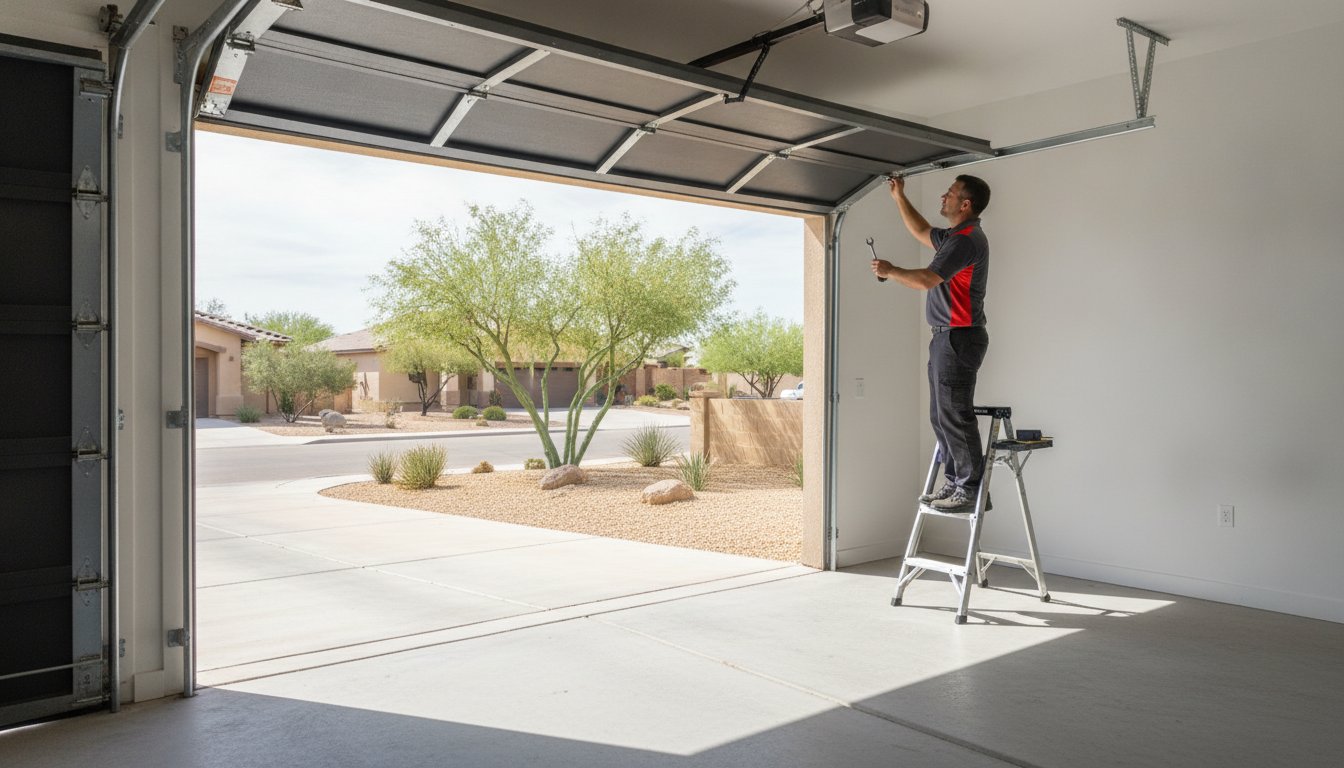
Imagine it's 4:00 PM in mid-July and the Phoenix sun is beating down at a blistering 110°F. You press your remote, but the door won't budge, leaving you and your melting groceries stranded on the driveway. It's a stressful situation that many homeowners face because our intense desert climate acts as a catalyst for mechanical failure. We know the anxiety of wondering if you're facing a simple sensor fix or an expensive spring replacement. Identifying common garage door problems Phoenix residents deal with is the first step toward restoring your home's security and your own peace of mind.
You shouldn't have to guess whether your door is safe to use or if you're about to be trapped inside. Our expert diagnostic checklist will help you pinpoint exactly what's wrong by looking at how the heat affects your specific system. We'll walk through the signs of thermal fatigue, explain the difference between minor glitches and major failures, and give you the clarity needed to make an informed decision about your next steps. You'll learn how to spot the warning signs before they become emergencies and understand exactly when it's time to call in a professional.
Key Takeaways
- Learn how extreme desert heat and monsoon grit specifically accelerate the wear and tear on your garage door components.
- Use our expert diagnostic checklist to identify common garage door problems Phoenix residents encounter, from broken springs to sensor obstructions.
- Discover which maintenance tasks are safe for a DIY approach and which high-tension repairs require an expert hand to ensure your safety.
- Follow our 2026 maintenance schedule to protect your system against heat-related dry rot and unexpected mechanical failures.
- Gain the clarity needed to determine if your garage door is safe to operate or if it's time to call for a reliable local repair service.
Why the Phoenix Climate Causes Common Garage Door Problems
Living in the Valley of the Sun means dealing with some of the most punishing weather in the country. Your garage door is the largest moving part of your home; it’s also the one most exposed to the elements. The Sonoran Desert climate doesn't just age your door; it actively works against the mechanical tolerances that keep it running smoothly. High temperatures and abrasive conditions create a unique set of challenges for local homeowners.
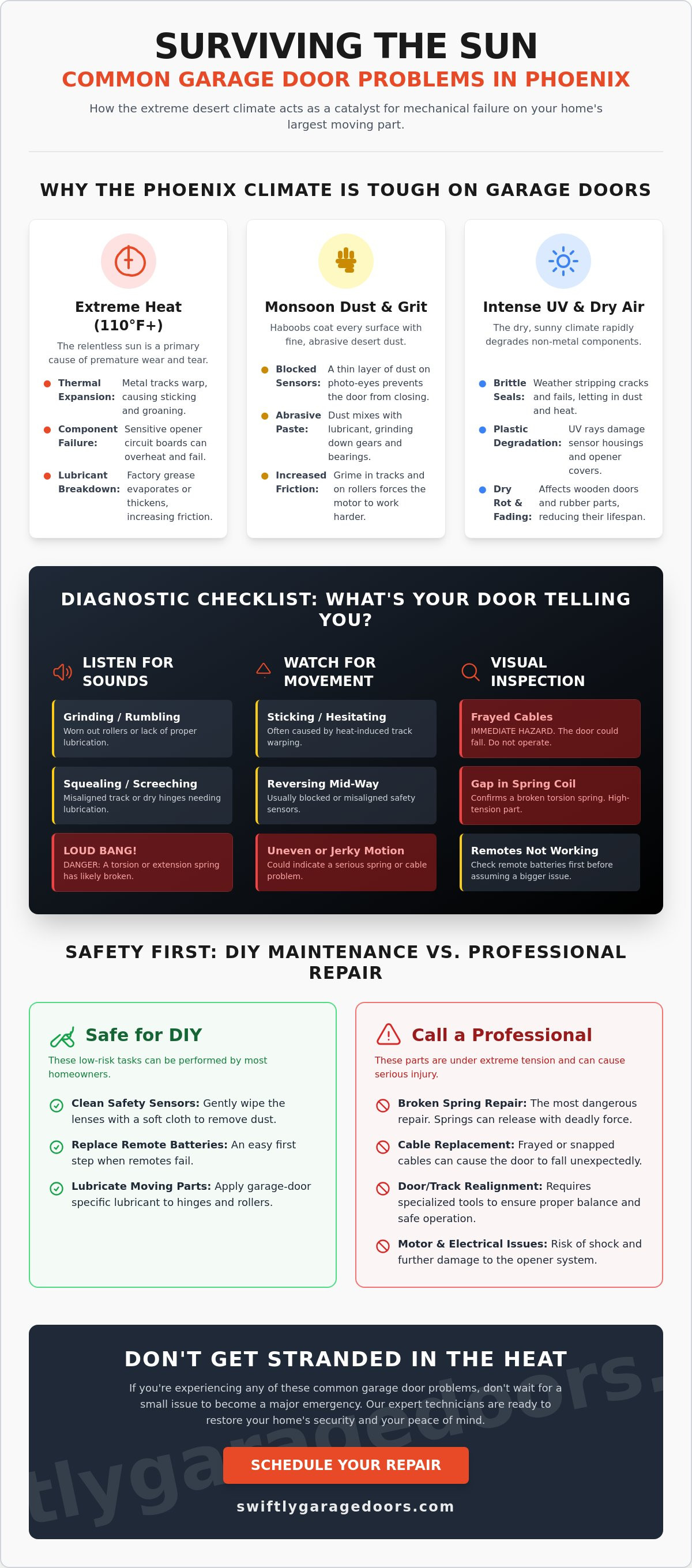
When temperatures soar above 110°F, the metal components of your system experience significant stress. These conditions lead to many common garage door problems Phoenix homeowners face, including warped tracks and brittle weather stripping. Beyond the heat, our extremely low humidity levels cause factory lubricants to evaporate or thicken into a sticky mess, while intense UV rays degrade plastic sensor housings and rubber seals. To see how these environmental factors manifest in real-world mechanical issues, watch this helpful breakdown:
Thermal Expansion and Your Door Alignment
Metal expands in the heat and contracts when the sun goes down. This constant cycle can cause your tracks to shift slightly out of alignment. You might notice your door sticks or groans in the late afternoon but works perfectly in the cool morning air. This isn't a technical glitch; it's physics. Rollers that were once sliding smoothly might now bind against the track walls. Additionally, extreme heat can be brutal on the sensitive circuit boards inside your garage door opener. These boards can overheat, leading to intermittent signal failures or a total loss of function when your garage reaches peak temperatures during the day.
The "Habub" Effect: Dust and Your Safety Sensors
Monsoon season brings haboobs that coat everything in a layer of fine, abrasive grit. This Arizona dust is notorious for settling on the lenses of your photo-eye sensors. If that infrared beam is blocked by even a thin layer of silt, your door will refuse to close as a safety precaution. Cleaning these sensors is frequently the most effective repair a homeowner can perform after a storm. However, dust doesn't just stop at the sensors. It can infiltrate the motor housing and mix with lubricant to create a grinding paste that wears down gears prematurely. Understanding the common garage door problems Phoenix residents encounter during monsoon season is essential for long-term maintenance. For professional assistance with these climate-driven issues, visit Swiftly Garage Doors for expert local support.
Diagnostic Checklist: Identifying Your Garage Door Issue
Pinpointing the root cause of a malfunction is the first step toward a safe resolution. Many common garage door problems Phoenix homeowners encounter can be diagnosed through a simple sensory check. Before you reach for any tools, start by isolating the symptoms. This methodical approach helps you determine if you're dealing with a simple maintenance task or a high-tension emergency that requires professional intervention.
Begin with a four-point inspection. First, the sound test; listen for anything outside the normal hum of the motor. Second, the movement test; watch if the door hesitates, moves unevenly, or reverses halfway through its cycle. Third, perform a visual inspection. Look for frayed cables or visible gaps in the coils of your torsion spring. Finally, conduct a power test. If the wall switch works but the remote is unresponsive, the issue might be as simple as a dead battery or frequency interference. If you find yourself stuck, a reliable local repair service can provide a definitive diagnosis.
What Your Garage Door Noises Are Telling You
Mechanical sounds are often the first warning sign of a pending failure. Grinding noises usually indicate that your rollers are worn out or that the factory lubrication has dried up in the desert heat. Squealing or high-pitched screeching suggests a misaligned track or dry hinges that are struggling to pivot. The most alarming sound is a sudden, loud "bang" that echoes through the house. This is the unmistakable sign of a snapped garage door spring. Because these springs are under immense tension, a break is often violent and renders the door too heavy for the opener to lift.
Why Your Door Keeps Reversing (The Sensor Checklist)
Safety regulations established by the Safety Commission mandate that all residential openers include an auto-reverse mechanism to prevent entrapment. If your door begins to close and then immediately pops back up, your photo-eye sensors are likely the culprit. Check the brackets at the base of your tracks for flashing LED lights, which indicate a signal interruption. In Arizona, fine dust from a recent storm or even simple cobwebs can block the infrared beam. Verify that the sensors haven't been bumped out of alignment by a trash can or garden tool. A quick wipe with a soft cloth and a minor adjustment to realign the lenses often solves this frustrating issue without a service call.
Safety First: DIY Maintenance vs. Professional Repair
Your safety is the top priority when troubleshooting your home. While it's tempting to grab a wrench and tackle common garage door problems Phoenix residents face, you must know where the "Safe Zone" ends and the "Danger Zone" begins. Most mechanical systems are designed for easy upkeep, but garage doors are unique because they operate under massive spring tension. One wrong move can turn a simple fix into a trip to the emergency room.
A standard garage door planned maintenance routine is perfectly safe for the average homeowner. You can tighten loose bolts, clean the tracks, and lubricate moving parts without risk. However, you should never attempt to adjust or remove a torsion spring or the bottom brackets. These components hold the energy required to lift a heavy door; if they snap or release unexpectedly, the results can be catastrophic. Serious issues like snapped cables or off-track doors require specialized winding bars and professional training to manage safely. If you encounter a mechanical failure that leaves your vehicle trapped, seeking an emergency garage door repair Phoenix specialist is the fastest way to restore safety and functionality.
Safe DIY Tasks for Phoenix Homeowners
Focus on preventative care to extend the life of your system. These simple actions keep your door running smoothly despite the harsh Arizona environment:
- Wipe down the metal tracks with a damp cloth to remove desert grit; avoid using heavy grease which actually attracts more dust.
- Replace remote control batteries every 12 to 24 months to ensure consistent signal strength through thick garage walls.
- Apply a high-quality silicone or lithium-based lubricant to hinges and rollers to combat the drying effects of the intense summer heat.
When to Call a Phoenix Expert Immediately
Some symptoms indicate a system that is no longer safe to operate. Call a professional if you notice the door hanging unevenly, which often means it has jumped the track. Look for a visible 2-inch gap in your torsion spring; this is a clear sign the spring has snapped and the door is no longer balanced. Finally, if the door is stuck halfway and won’t move manually, don't force it. Forcing a stuck door can burn out your opener's motor or cause the lifting cables to fray and snap under the added stress. Getting an expert diagnosis early prevents common garage door problems Phoenix homeowners deal with from turning into expensive full-system replacements.
The 2026 Phoenix Garage Door Maintenance Checklist
Consistent maintenance is your best defense against the harsh Sonoran Desert environment. By following a structured schedule, you can prevent many common garage door problems Phoenix homeowners often experience during peak summer. Don't wait for a total system failure to pay attention to your door's health. Small, proactive steps today save you from the high cost of emergency repairs when it's 115 degrees outside.
Use this 2026 maintenance guide to stay ahead of mechanical wear:
- Monthly: Perform a balance test and check the auto-reverse safety sensors to ensure they aren't blocked by monsoon debris or Arizona grit.
- Quarterly: Inspect the perimeter weather stripping for signs of dry rot, cracking, or shrinking caused by relentless UV exposure.
- Bi-Annually: Apply a high-quality silicone lubricant to all moving metal parts, including hinges and rollers. Never lubricate the tracks themselves, as this creates a sticky trap for desert dust.
- Annually: Schedule a comprehensive professional tune-up. Standard torsion springs are typically rated for 10,000 cycles, but the Phoenix heat can reduce this lifespan by 20% to 30% due to thermal cycling fatigue.
Step-by-Step: The Balance Test
Testing the balance of your door is a critical safety step you can perform in under five minutes. To start, disconnect the opener by pulling the red emergency release cord while the door is fully closed. Manually lift the door to the halfway point and let go. A perfectly balanced door should stay in place or move only slightly. If the door crashes to the floor or bolts upward, the spring tension is incorrect and requires professional adjustment. Operating an unbalanced door puts immense strain on your hardware. An unbalanced door will eventually burn out your opener motor, leading to a much more expensive replacement.
Weatherproofing for the Arizona Heat
The rubber seal at the bottom of your door is your first line of defense against more than just the heat. Inspect this strip for cracks, brittle sections, or gaps that allow abrasive dust and desert scorpions to enter your home. If you can see light under the door when it's closed, your seal has failed and needs replacement. Take a moment to look at your door panels for sun-bleaching or warping. Extreme UV exposure weakens the structural integrity of certain materials over time, which may require reinforcement or specialized coating. Finally, check that your opener motor isn't struggling in the garage attic space. Attic temperatures often exceed 150°F in July, causing electronic components to fail prematurely. If your door fails the balance test or shows significant heat damage, contact our expert team for a professional tune-up today.
Swiftly Garage Doors: Your Reliable Phoenix Repair Experts
Swiftly Garage Doors understands that a malfunctioning door is more than a minor inconvenience; it's a security risk and a major disruption. We provide expert diagnostics tailored to the specific needs of homes across the Valley. Our technicians specialize in identifying and resolving the common garage door problems Phoenix residents face every day. We offer 24/7 emergency availability for those high-stakes moments when a broken spring or stuck door leaves you stranded. Whether it's a late-night mechanical failure or a mid-day sensor glitch, our team is prepared to restore your home's functionality.
Transparency is the foundation of our service. We provide honest estimates and clear communication from the moment we arrive at your property. Our team serves a wide range of communities, including Mesa, Scottsdale, Peoria, and Glendale. We focus exclusively on residential systems, ensuring that our expertise is concentrated on the specific hardware used in local homes. This specialized focus allows us to carry the exact parts needed for most repairs right on our trucks, reducing the need for multiple visits and getting you back to your routine faster.
Why Local Expertise Matters in the Valley
Our technicians live and work in this environment. They understand how Sonoran Desert dust and extreme heat accelerate the degradation of your system. We don't use generic parts that might fail during an August heatwave. Instead, we carry high-quality components designed to withstand Arizona summers. Our fast response times ensure your home remains secure and your daily routine stays on track. We prioritize timeliness because we know how quickly a garage can turn into an oven in the afternoon sun. You can trust our "no-nonsense" approach to prioritize your safety and peace of mind above all else.
Ready to Get Your Door Back on Track?
Professional inspections offer a level of peace of mind that DIY troubleshooting simply cannot provide. We identify the small issues, like worn rollers or slightly misaligned tracks, before they escalate into 2:00 AM emergencies. Investing in preventative maintenance today protects your motor and your budget in the long run. Our goal is to provide a steady, expert hand that you can rely on year-round. Don't wait for your door to fail completely. Contact Swiftly Garage Doors today for a professional diagnostic and repair!
Secure Your Home Against the Arizona Heat
Managing your garage door in the Valley requires constant vigilance. You now have the tools to identify common garage door problems Phoenix homeowners face, from heat-warped tracks to dust-clogged sensors. By following a regular maintenance schedule and performing monthly balance tests, you can extend the life of your hardware and avoid the danger of a sudden mechanical failure. Remember that high-tension components like torsion springs are never safe for DIY repair; recognizing these warning signs early is the best way to protect your property and your family.
Don't let a minor glitch turn into a midnight emergency. Our team offers 24/7 emergency service and same-day appointments to ensure you're never trapped in or out of your home. As expert torsion spring specialists, we provide the technical proficiency needed to handle the most complex repairs with total transparency. Take the stress out of your household maintenance today. Schedule Your Phoenix Garage Door Tune-Up with Swiftly Garage Doors and enjoy the peace of mind that comes with a perfectly functioning system. We're ready to help whenever you need us.
Frequently Asked Questions
Why is my garage door making a loud grinding noise in the heat?
Metal tracks and rollers expand significantly when Phoenix temperatures exceed 110 degrees, causing components to rub together. This thermal expansion alters the tight mechanical tolerances of your system and increases friction. You can often resolve this by applying a high quality silicone lubricant to the rollers and hinges. Avoid putting grease in the tracks, as this only attracts desert dust and worsens the grinding over time.
Can I fix a broken garage door spring myself?
No, you should never attempt to replace or adjust a garage door spring because the high tension is extremely dangerous. These springs hold enough energy to cause severe injury or property damage if they snap during a DIY repair. A snapped spring is one of the most serious common garage door problems Phoenix homeowners face. It requires specialized winding bars and professional training to handle the replacement safely and correctly.
How often should I perform garage door maintenance in Phoenix?
You should perform a basic visual inspection every month and schedule a professional tune up at least once a year. The intense Sonoran Desert heat and monsoon dust accelerate the wear on factory lubricants and rubber seals. An annual service before the summer peak ensures your system can handle the extreme thermal cycling. This proactive approach prevents small issues from turning into expensive emergency repairs during a heatwave.
Why does my garage door remote only work when I am standing right in front of it?
Reduced range is usually caused by a dying battery or signal interference from other household electronics. Start by replacing the remote battery to see if the signal strength improves. If the problem persists, the opener antenna might be blocked or the internal circuit board could be struggling with heat damage. Intense attic temperatures in Arizona can cause sensitive electronic components to fail, leading to inconsistent remote responsiveness.
What should I do if my garage door gets off track?
Stop using the door immediately and disconnect the opener to prevent the motor from burning out. An off track door is unstable and can fall unexpectedly, creating a major safety hazard for anyone nearby. Do not try to force the door back into the tracks yourself. This situation requires a technician to reset the cables and realign the tracks to ensure the entire system is balanced and safe to operate.
Is it normal for my garage door to be louder during the summer months?
Yes, it is common for doors to become noisier as temperatures rise and metal components expand. The heat causes the tracks and rollers to shift slightly, which often leads to increased vibration and groaning sounds. While some noise is expected, excessive grinding suggests that your lubrication has dried out in the low humidity. Replenishing the lubricant on moving parts will usually quiet the system and prevent permanent hardware damage.
How do I clean my garage door safety sensors correctly?
Use a soft, dry microfiber cloth to gently wipe the lenses of both photo eye sensors at the base of your tracks. Arizona dust from haboobs often creates a thin film that blocks the infrared beam, causing the door to reverse. Avoid using harsh chemicals or excessive water that could damage the electronics. A simple, gentle wipe is usually enough to clear the signal and restore the safety system's normal operation.
Why won’t my garage door close even though nothing is in the way?
This issue is often a sign that your safety sensors are misaligned or blocked by fine desert silt. If the small LED lights on the sensor brackets are flickering or dark, the infrared beam is interrupted. Realign the brackets until the lights stay solid to ensure the sensors face each other directly. This is a frequent solution for common garage door problems Phoenix residents deal with after windy monsoon storms.