Garage Door Off Track Fix: A Homeowner’s Safety and Repair Guide
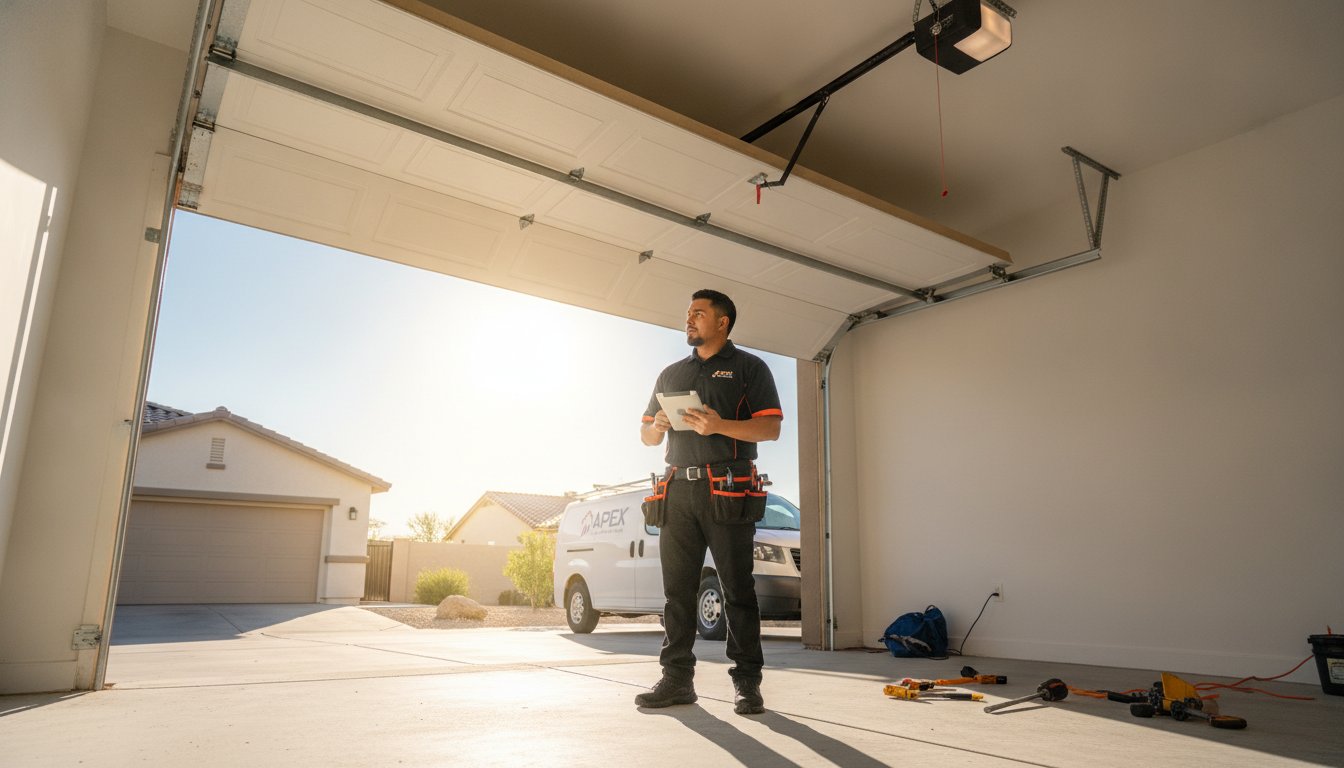
If you think your garage door just needs a quick nudge back into its groove, you're likely overlooking a larger mechanical failure waiting to happen. A door that has jumped its rollers isn't just an eyesore; it's a 400-pound hazard hanging by a thread. Finding your car trapped inside when you're already running late is incredibly frustrating. It's natural to want a fast garage door off track fix to restore your home's security, but rushing the process can lead to serious injury or even more expensive structural damage.
You deserve to know whether your door is a simple DIY project or a job for a professional. This guide explains why doors leave their tracks, how to identify the root cause, and the safest way to get your system moving again. We'll examine the risks involved and help you understand the long-term benefits of a professional repair versus a temporary patch. By the end, you'll have the clarity needed to make an informed decision for your home and your family's safety.
Key Takeaways
- Learn to spot the "Warning Lean" and understand how snapped lift cables or track damage can derail your entire system.
- Discover why pulling the emergency release cord on a lopsided door is dangerous and can lead to a total door collapse.
- Understand the professional garage door off track fix process, including how technicians secure the door with C-clamps before resetting the rollers.
- Find out how to use the "Look and Listen" test to catch alignment issues early and avoid expensive emergency service calls.
What Does it Mean When a Garage Door is Off Track?
An off-track garage door occurs when the rollers escape the metal guide rails that dictate the door’s path. You’ll recognize this problem immediately by the "Warning Lean," a tell-tale lopsided appearance where one side of the door sits visibly higher than the other. This usually happens at the curved radius of the track, the critical transition point between vertical and horizontal movement where mechanical stress is highest. If the rollers lose their footing here, the door becomes jammed, making it impossible to open or close safely.
If one roller pops out, the remaining hardware must suddenly carry 100% of the door's weight. This shift creates a dangerous imbalance that can lead to a total system failure. Seeking a professional garage door off track fix isn't just about convenience; it's about preventing a heavy piece of equipment from becoming a safety hazard in your driveway. A door that is out of alignment is unstable and unpredictable.
To better understand how a professional handles this situation, watch this expert technician perform a repair:
The Anatomy of a Garage Door Track System
The track system consists of vertical tracks that guide the door up from the floor and horizontal tracks that hold it against the ceiling. These are connected by a curved section known as the radius. Within these tracks, roller stems and brackets act as the "locking" mechanism, ensuring the door stays aligned during every cycle. Understanding basic garage door mechanics helps you see how lift cables work in tandem with these tracks to keep the door level. If a cable frays or a bracket loses its grip, the rollers have nothing to keep them seated in the guide, causing the door to bind or drift.
- Vertical Tracks: These guide the door from the floor to the header.
- Horizontal Tracks: These support the door when it is fully open.
- The Radius: The curved section where the door transitions from vertical to horizontal travel.
Why an Off-Track Door is a High-Priority Emergency
An off-track door is a structural emergency that requires immediate attention. The risk of a total door collapse is high, especially if the door is stuck in a half-open position with uneven tension. You should never stand under or attempt to force a lopsided door. The sudden shift in weight can cause the entire unit to drop without warning, potentially causing catastrophic injury. It's a risk that isn't worth taking for a quick fix.
Beyond physical safety, a door that won't close creates a massive gap in your home security. It essentially leaves your garage and the entrance to your home wide open to intruders. Ignoring the issue also leads to expensive secondary damage. When the door is jammed, the motor will struggle against the resistance, which can quickly burn out your garage door opener. Addressing the garage door off track fix immediately protects your property and your wallet.
Common Causes: Why Your Garage Door Jumped the Track
Most homeowners assume the track itself is the problem. In reality, the track is usually just the victim of a larger mechanical failure. Identifying the root cause is the first step in a successful garage door off track fix. If you simply shove the rollers back in without addressing the source of the malfunction, the door will likely derail again within days. It’s a symptom of a system that is no longer working in harmony.
Impact damage is a frequent culprit. It only takes a minor tap from a car bumper to bend the lower vertical track. Once that metal guide is out of alignment, the rollers have nowhere to go but out. Other times, a simple broom handle or garden tool leaning against the wall gets caught in the door's path. This creates a sudden obstruction that forces the door to twist, derailing it under the heavy pressure of the opener motor. Even loose hardware can trigger a crisis. Over thousands of cycles, the vibration of the motor can back out the bolts holding the track brackets to the wall. When the track becomes loose, it shifts during operation, allowing the rollers to escape their channel entirely.
The Role of Garage Door Springs and Cables
Lift cables are the #1 hidden cause of off-track malfunctions. These high-tension steel lines carry the weight of the door. If one snaps or even begins to fray, the tension becomes dangerously lopsided. This causes the door to "walk" out of the track because one side is being pulled upward while the other remains slack. This is why garage door spring repair is often the actual solution to a derailment. When the counterbalance system fails, the door pulls unevenly and jumps the rails almost instantly. Because these components are under extreme tension, the Federal safety standard for garage doors exists to highlight the inherent risks of these heavy residential systems.
Environmental Factors in the Phoenix Valley
In the Phoenix area, our environment creates unique challenges for your garage door hardware. The intense Arizona sun causes metal tracks to expand and contract, which can slowly pull them out of alignment over several seasons. Desert silt and fine dust also build up in the tracks, acting like sandpaper on your rollers. This grinding effect strips away lubrication and causes the rollers to seize, eventually forcing them to jump the track. In older homes, dry rot in wooden door jambs can cause the mounting screws to pull away from the wall. If you notice your door shaking or making unusual grinding noises, it might be time to book a diagnostic inspection before a total derailment occurs.
DIY vs. Professional Garage Door Off Track Fix
Deciding whether to attempt a garage door off track fix yourself depends entirely on the severity of the derailment. If the door is lopsided or hanging by a single roller, you're facing a high-tension crisis. One of the most dangerous mistakes homeowners make is falling into the "Red Cord" trap. Pulling the emergency release cord on an off-track door disconnects the motor, which is often the only thing holding the door's weight. Without that mechanical support, the door can crash down instantly, causing severe injury or totaling the door panels beyond repair.
A proper fix requires more than just a standard home toolbox. You need heavy-duty C-clamps to secure the door's weight, locking pliers to hold the tension, and specialized winding bars if the springs need adjustment. Using a screwdriver or a pipe wrench as a substitute for a winding bar is a recipe for a trip to the emergency room. A small mistake during a DIY attempt can bend the door sections or damage the tracks permanently. When you compare the cost of a professional service call to the price of a full door replacement, the professional route is almost always the smarter financial move.
When DIY is (Rarely) Possible
Homeowners can safely handle basic maintenance that prevents tracks from failing. If you spot a loose bolt on a track bracket, tightening it with a socket wrench is a perfectly safe task. You can also clear minor obstructions like pebbles or garden tools from the guide rails. Regular cleaning and applying a silicone-based lubricant to the tracks can prevent the "sticky" movement that often leads to a derailment. However, if the door has already jumped, the situation has likely moved beyond simple maintenance and into the territory of mechanical repair.
Why Professionals Are Required for Off-Track Repairs
Most off-track scenarios involve the torsion spring system. You should never touch the bottom bracket or the lift cables yourself, as these components are under enough tension to cause life-altering injuries. Resetting the drum and cable is a precision task that requires two people; one to manage the weight and another to align the hardware. Professionals also ensure the tracks are perfectly squared and plumb. If the rails aren't exactly parallel, the door will bind and derail again. A skilled technician provides the peace of mind that the job is done right the first time.
The Professional Repair Process: What to Expect
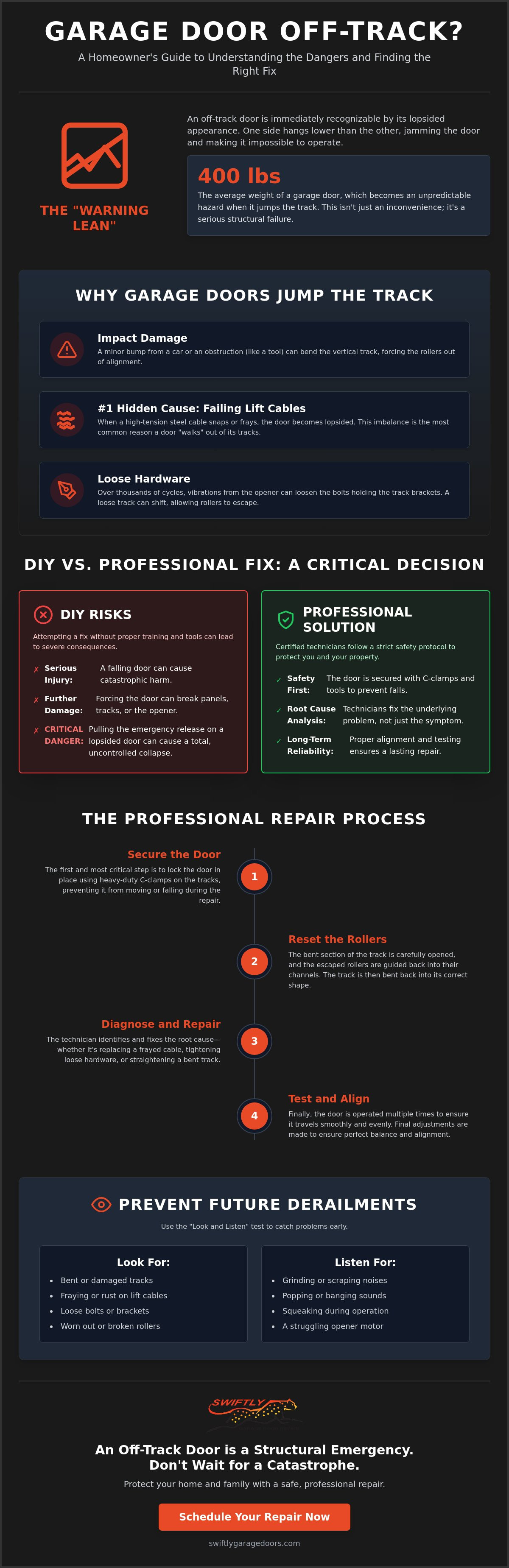
A professional garage door off track fix isn't a matter of brute force. It's a methodical restoration of mechanical balance. When a technician arrives, their first move is to stabilize the environment. They use heavy-duty C-clamps to lock the door into the vertical tracks. This prevents the door from crashing down while they work on the high-tension components. Once the door is secure, they safely disconnect the opener and release the tension from the torsion springs. This step is critical; without releasing that energy, reseating the rollers is impossible and dangerous.
After the tension is gone, the technician realigns the tracks. They use specialized tools to bend the metal back into its original profile or replace sections that are too damaged to save. The rollers are then carefully reseated into the guide rails. The process continues with recalibrating the cable drums to ensure the door lifts evenly. At this stage, they also perform a garage door sensor alignment check. If the sensors are out of sync due to the track shift, the door won't close reliably even after the mechanical fix is complete. A final load test ensures the entire system moves through its cycle without hesitation.
Diagnostic Testing Beyond the Track
A true expert looks beyond the obvious derailment. They inspect the roller stems for bends or fractures that could cause a repeat failure. If a roller is seized, it will simply drag and pop out again. They also test the balance of the door. A properly balanced door should stay in place when left halfway open. Finally, they check the opener rail for stress fractures. The sudden stop of a jammed door often puts immense pressure on the motor's mounting hardware, which can lead to a secondary failure if ignored.
Safety Calibration and Final Inspection
The final phase focuses on long-term safety. Technicians verify that the auto-reverse feature works perfectly. This is a non-negotiable safety requirement for every modern home. They also lubricate every moving part with high-grade lithium or silicone spray to ensure quiet operation and reduce friction. The door is leveled to within 1/8th of an inch across the floor to prevent air gaps or security vulnerabilities. If your door is lopsided and you need a reliable solution, contact our repair experts for a professional diagnostic today.
Preventing Future Derailments and Staying Safe
A professional garage door off track fix restores your door to its proper alignment, but staying proactive ensures it stays there. Prevention is the most effective way to avoid the sudden stress of a stuck car or a compromised home. Start by performing the "Look and Listen" test at least once a month. Watch your door as it opens and closes. If you notice jerky movements or hear loud grinding noises, your rollers might be dragging. Spotting common garage door problems early prevents minor friction from turning into a dangerous derailment.
Scheduling annual maintenance is a smart investment for any homeowner. A professional tune-up is always cheaper than an emergency service call caused by a total system failure. During a maintenance visit, a technician will tighten the track brackets and verify that the door remains perfectly balanced. You can also take matters into your own hands with a simple cleaning routine. Use a damp rag to wipe the inside of the metal tracks. This five-minute task removes the grit and grime that causes rollers to jump, preventing roughly 50% of all off-track issues. When a crisis does occur, don't attempt to force the door. Call for emergency garage door repair Phoenix to handle the high-tension components safely.
Homeowner Maintenance Checklist
Consistency is the key to a long-lasting garage door. Use this checklist to keep your system in top shape between professional visits. First, perform a visual inspection of the lift cables. Look for "furring" or rust, as these indicate the steel is weakening. Second, check that all track bolts are snug. The vibration of the opener can loosen these over time, causing the tracks to shift. Finally, focus on the environment. Wiping down the tracks removes the fine Phoenix dust that acts like sandpaper on your hardware. These small habits protect your investment and keep your family safe.
Choosing Swiftly Garage Doors for Your Off-Track Fix
Your home's security is our top priority. We offer 24/7 same-day emergency service across Phoenix, Mesa, and Scottsdale to ensure you're never left vulnerable. Our technicians provide transparent estimates upfront, so you never have to worry about hidden fees when you need a garage door off track fix. We combine technical proficiency with a neighborly approach, treating your property with the respect it deserves. Our team is ready to respond whenever a malfunction disrupts your day. Contact Swiftly Garage Doors to restore your home’s security today.
Secure Your Garage and Protect Your Family Today
An off-track garage door is more than a minor inconvenience; it's a structural failure that leaves your home and vehicles vulnerable. We've explored how snapped cables and impact damage trigger these malfunctions, and why attempting a DIY garage door off track fix can lead to dangerous collapses. Relying on expert recalibration ensures your door is balanced, leveled, and safe for daily use. Don't let a lopsided door compromise your peace of mind or lead to expensive structural damage that could have been avoided with a professional touch.
Our team provides 24/7 Emergency Same-Day Service throughout Phoenix, Mesa, Tempe, and Scottsdale. We pride ourselves on transparent estimates and skilled technical work that gets the job done right the first time. Our expert technicians are ready to stabilize your system and restore full functionality with professional precision. We handle the heavy lifting so you don't have to risk your safety.
Get Your Garage Door Back on Track; Call Swiftly Garage Doors Now!
Take the first step toward a functional home today. We're here to help you navigate this emergency with speed and reliability, ensuring your garage door is as dependable as it was the day it was installed.
Frequently Asked Questions
Is it safe to use my garage door if it is slightly off track?
No, it is not safe to operate a door that is even slightly misaligned. Continuing to use the door puts extreme stress on the remaining rollers and brackets, which can cause the entire unit to fall. A door that isn't seated properly in its tracks is unpredictable and can drop without warning. Stop operation immediately and seek a professional garage door off track fix to avoid injury or permanent panel damage.
How much does it cost to fix a garage door that is off track?
Industry data shows that the average cost to repair an off-track door typically ranges between $125 and $400. Minor realignments often fall on the lower end of that scale. If the repair requires replacing bent tracks or damaged cables, costs can increase toward the $400 mark. Keep in mind that labor rates for a professional technician generally range from $75 to $150 per hour depending on the complexity of the job.
Can I pull the emergency release cord if my door is off track?
You should never pull the emergency release cord when a door is off track. The opener's carriage often acts as a secondary safety catch that prevents the door from crashing down. If you pull the red cord, you disconnect that support. This can cause a lopsided or jammed door to collapse instantly under its own weight. Keep the door connected to the opener until a technician can secure it with heavy-duty clamps.
Why did my garage door cable come off the drum?
Cables usually jump the drum when they lose tension. This often happens if a torsion spring breaks or if the door hits an obstruction while closing. When the door stops moving but the opener keeps running, it creates slack in the steel lines. This slack allows the cable to slip off the grooves of the drum. Once the cable is off, the door will pull unevenly and jump the tracks immediately.
How long does it take for a professional to fix an off-track garage door?
Most professional repairs take between one and three hours to complete. The time depends on whether the tracks are simply misaligned or if components like cables and springs also need replacement. A technician must first secure the door, release the tension, and then carefully reseat every roller. They will also perform a balance test and safety calibration, ensuring the system is fully restored and safe for your family to use.
Can a bent garage door track be repaired, or does it need replacement?
It depends on the severity of the damage. Technicians can often straighten minor bends in the vertical or horizontal tracks using specialized tools. However, if the metal is creased, cracked, or severely warped from a vehicle impact, replacement is necessary. Compromised tracks lack the structural integrity to hold the door's weight safely. A professional will inspect the rails to determine if a simple realignment or a full track replacement is the safest path.
What happens if I keep trying to operate an off-track door with the opener?
Forcing the door to move with the opener will likely result in a burnt-out motor and bent panels. Garage door openers are designed to lift a balanced door, not to fight against a jammed track. The resistance will cause the motor to overheat and may snap the drive belt or chain. Additionally, the uneven pressure can twist the metal door sections, turning a simple track repair into a much more expensive full door replacement.
Do I need to replace my whole garage door if it falls off the track?
Total replacement is rarely necessary for a standard derailment. Most off-track issues can be resolved by resetting the rollers and replacing specific hardware like cables or tracks. You only need a new door if the fall caused significant structural damage to the panels themselves. If the sections are creased or the hinges have ripped out of the metal, a professional will evaluate whether the door can be safely repaired or if replacement is the better value.