How to Know if Your Garage Door Spring is Broken: A Homeowner's Checklist
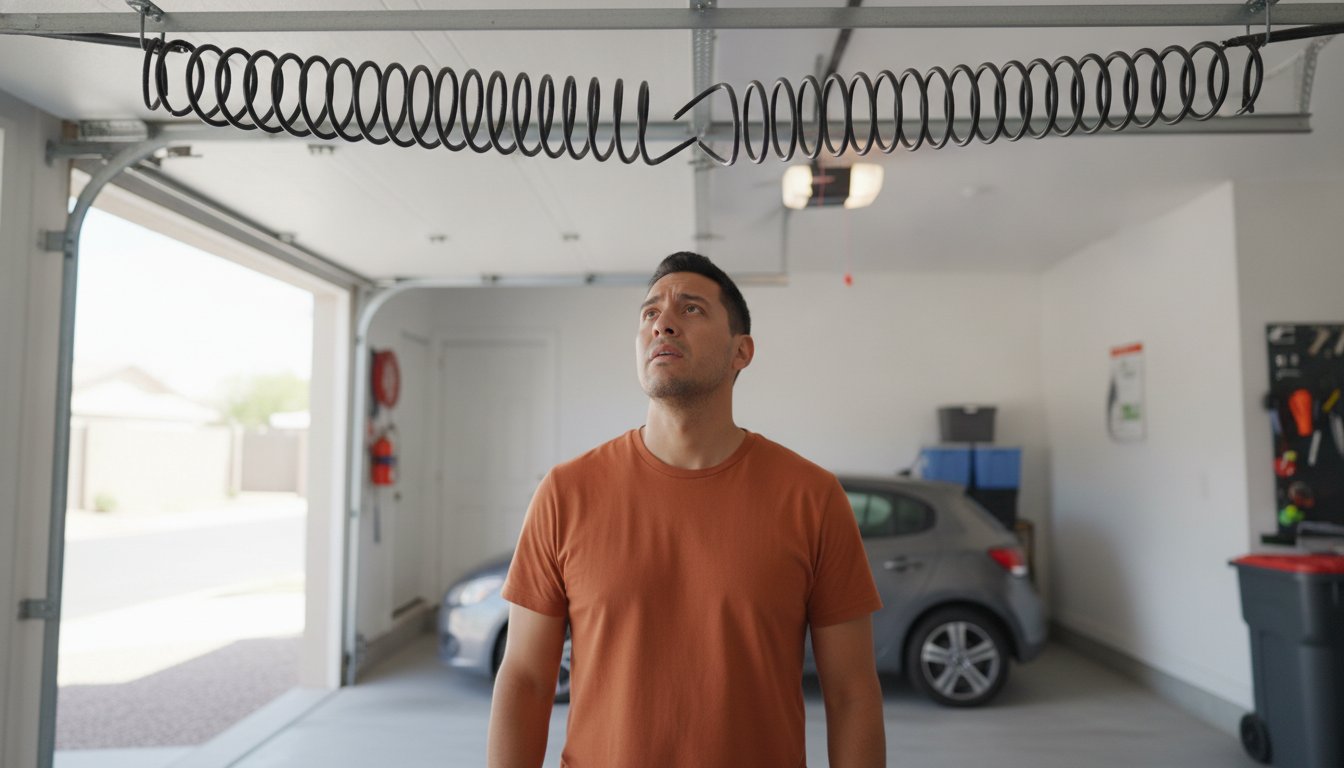
You are already ten minutes late for work when you hit the garage door button, only to hear a deafening bang that sounds like a gunshot in your driveway. You try the opener again, but the door barely moves an inch, leaving your car trapped inside. This frustrating scenario is a classic sign of a failed component, but you need to be certain before you start poking around. Understanding how to know if garage door spring is broken is the first step toward getting your day back on track and ensuring your family stays safe.
We know that a malfunctioning door feels like a major blow to your schedule and your budget. It's stressful to wonder if you're facing a simple sensor alignment or a high-tension spring failure that could be dangerous to touch. This checklist provides the clarity you need. We'll identify the critical signs of a broken garage door spring, explain why our intense Phoenix heat accelerates these issues, and outline the safe next steps to secure your home. You will learn exactly what to look for and when it is time to call in a professional for a fast, reliable repair.
Key Takeaways
- Spot immediate visual failures like the distinctive two inch gap in a torsion spring or tangled steel cables hanging from the tracks.
- Identify why your door suddenly feels like it weighs hundreds of pounds and why it might stop after rising only a few inches.
- Discover how to know if garage door spring is broken by comparing the unique failure signs of torsion and extension systems.
- Understand the "Phoenix Factor" and how our intense desert heat shortens the life of your springs to roughly seven to ten years.
- Follow a strict safety protocol to protect your family and property once you confirm a spring has snapped.
Visual Checklist: 4 Immediate Signs of a Broken Garage Door Spring
Identifying a mechanical failure in your garage doesn't require a technician's degree, but it does require a sharp eye. When you're trying to figure out how to know if garage door spring is broken, your first move should be a safe visual walk-around. These springs are under immense tension, so keep your distance and keep your hands off the hardware while you look. A simple visual inspection can often confirm the problem in seconds.
To better understand what these components look like when they fail, watch this helpful video:
Start by looking at the overall balance of the door. If one side sits significantly higher than the other, you likely have a "crooked" door caused by a single broken spring. This happens because the remaining functional spring is pulling unevenly. You should also check the top panel of your door. If the metal is starting to bend or buckle where the opener arm attaches, it means the motor is trying to "muscle" the door open without the necessary help from the springs. Finally, look for sagging or snapped cables. When a spring breaks, the steel cables often lose tension and will hang loose or become tangled around the side drums. If you see these signs, professional Garage Door Spring Repair is necessary to prevent further damage to your opener or door panels.
Spotting the Gap in Torsion Springs
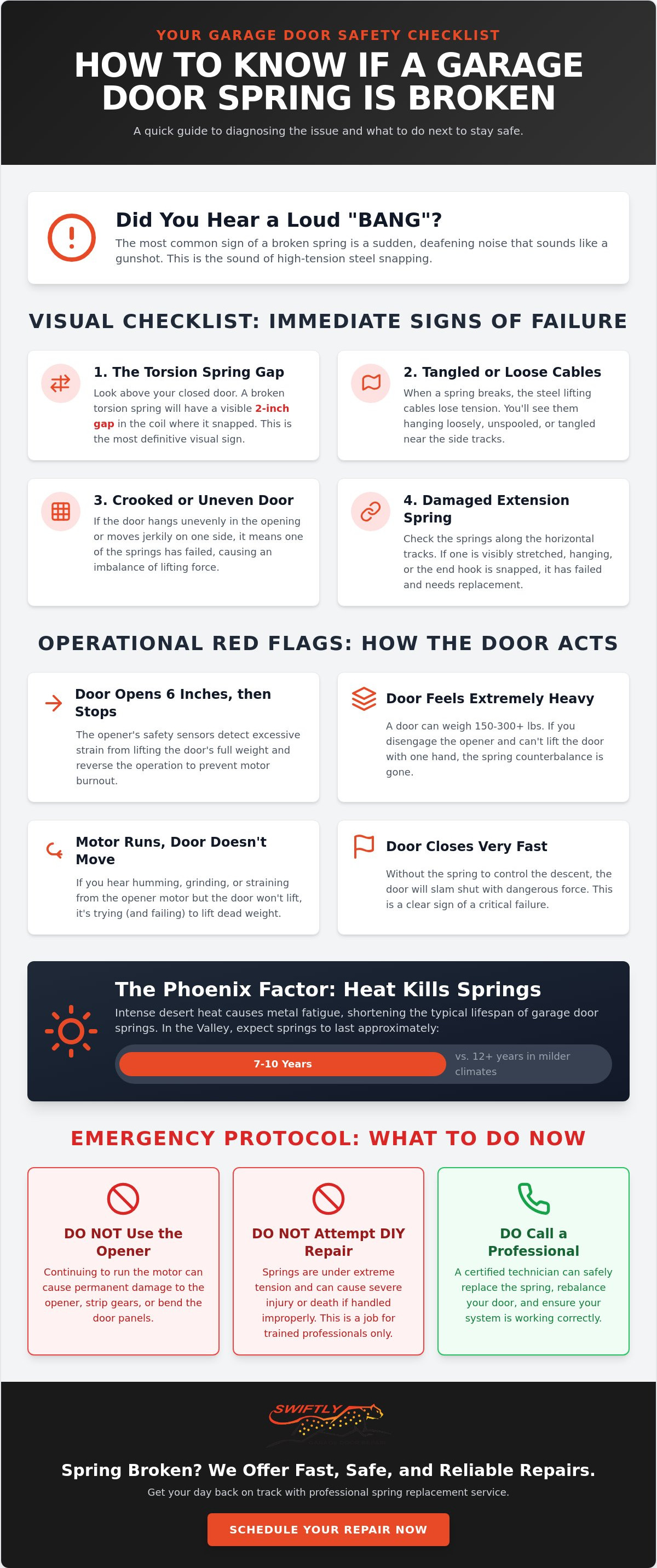
Look at the metal shaft located directly above your closed garage door. Most modern homes in the Phoenix area use a system of torsion or extension springs to handle the heavy lifting. A torsion spring is a tightly wound coil wrapped around that metal shaft. When it fails, the coil snaps and creates a very obvious two inch gap between the two broken ends. Seeing a clear separation in the middle of the spring coil is the most definitive sign of a complete mechanical failure.
Identifying Snapped Extension Springs
If you don't see a large spring above the door, look at the long springs running parallel to the upper horizontal tracks on both sides. These are extension springs. Check if the coils look elongated, stretched out, or if the spring is hanging limply by the safety cable. Extension springs often fail at the "hook" or end-loop where they connect to the track bracket. If the spring is in two pieces or the hook has straightened out, the spring can no longer provide the counterweight needed to lift the door.
Operational Red Flags: How the Door Acts When a Spring Fails
Sometimes the visual signs aren't immediately obvious, especially if the break is hidden behind a bracket or inside a housing. In these cases, the way your door behaves during operation is your best diagnostic tool. If you are wondering how to know if garage door spring is broken, look for a sudden change in how the door responds to your remote or wall button. The springs are the actual "muscles" of the system. The opener is merely the guide. When that muscle is gone, the entire operation falls apart in very specific, predictable ways.
One of the most common red flags is the "heavy door" phenomenon. A standard residential garage door can weigh anywhere from 150 to over 300 pounds. Under normal conditions, you should be able to lift it with one hand because the springs provide the necessary counterbalance. If the door feels like it's made of solid lead or won't budge even when you try to help it, a broken spring is almost certainly the culprit. You might also notice jerky, stuttering movements. If the door moves unevenly along the tracks or one side seems to lag behind the other, the tension is no longer distributed correctly. Listen closely to your opener as well. A motor that hums, grinds, or makes a strained whining sound without successfully moving the door is a clear sign that it's being asked to do a job it wasn't designed for. If you hear these sounds, it's time to seek a reliable garage door service before the motor burns out completely.
Why the Door Stops After 6 Inches
Modern garage door openers are equipped with sensitive safety force sensors. These sensors are designed to detect when the motor is under excessive strain. If your door rises about three to six inches and then immediately shuts or reverses, the opener has detected that the "dead weight" of the door is too high. This is a safety feature to prevent the motor from overheating or the internal gears from stripping. Never attempt to "force" the door to run by holding down the button or repeatedly cycling the power. Doing so can turn a simple spring fix into a much more expensive motor replacement. For immediate motor protection and professional assistance, you should contact emergency garage door repair Phoenix to handle the tension safely.
The Dangers of the Manual Release Cord
The red emergency release cord is designed to disconnect the door from the opener, but it is extremely dangerous to use when a spring is broken. If you pull that cord while the door is in the "up" position, or even slightly cracked open, there is nothing left to hold the weight. The door can crash down with lethal force, potentially causing catastrophic injury or property damage. Our directive is simple: do not touch the red cord if you suspect a spring failure. Keep the door exactly where it is and wait for a technician who has the tools to support the weight of the door while the springs are replaced.
Spring System Identification: Torsion vs. Extension Signs
Before you can accurately diagnose a failure, you must identify which type of spring system is currently installed on your garage. Most homeowners don't realize that different systems fail in different ways. While the end result is the same—a door that won't open—the visual cues and safety risks vary between the two. Understanding these differences is a key part of how to know if garage door spring is broken and helps you communicate clearly with a technician when you call for a repair.
There are two primary systems used in residential properties:
- Torsion Springs: These are mounted on a heavy metal shaft directly above the door opening. They work by twisting to create torque.
- Extension Springs: These are long, thin springs that run parallel to the horizontal tracks on the ceiling. They work by stretching and contracting.
The life expectancy of these components is measured in "cycles," where one cycle equals a single opening and closing of the door. Most standard springs are rated for 10,000 cycles. In a typical household that uses the garage four times a day, this translates to roughly seven years of service. High-cycle springs are often available with ratings of 25,000 to 50,000 cycles, providing a much longer lifespan for busy families. Because Phoenix heat can accelerate metal fatigue, keeping track of your spring's age is vital for preventing a sudden break.
Checking Your Torsion System
Torsion springs have become the standard for most modern Phoenix homes because they are generally considered safer and more durable. If you want to dive deeper into the mechanics, read our Garage Door Spring Types: Torsion vs. Extension guide. In a torsion system, the spring is wound tightly under extreme pressure. Even when a spring snaps, the remaining coils on the shaft can still hold dangerous "winding" tension. If you see a gap in the coil, the system has lost its ability to lift, but the hardware remains hazardous to handle without specialized tools.
Inspecting Extension Springs Safely
Extension springs are more common in older homes or garages with low headroom. When these fail, they often snap or stretch until they lose their recoil. You might find small fragments of metal on the garage floor, which indicates the steel has reached its breaking point. A critical safety feature for these systems is the safety cable. This steel wire runs through the center of the extension spring. If the spring snaps, the cable is designed to catch it, preventing the heavy metal from flying across the room. If you see a spring hanging loosely from a cable or lying on the floor, it has reached the end of its functional life.
The Phoenix Factor: Why Springs Break in the Valley
In the Sonoran Desert, your garage door faces unique environmental pressures that homeowners in cooler climates never encounter. While coastal residents fight salt air and rust, Phoenix residents battle thermal fatigue. When temperatures climb past 110°F, the intense heat alters the physical properties of the steel. The sun is the enemy. This extreme heat makes the metal more susceptible to losing its temper, which directly impacts its ability to support the heavy weight of your door. If you are trying to figure out how to know if garage door spring is broken, start by considering how long your hardware has been baking in an Arizona garage.
Lack of lubrication is another silent killer in our region. Our famously dry air causes standard lubricants to evaporate or gum up much faster than in humid environments. Without a smooth layer of protection, the coils of your spring rub against each other with every movement. This creates excessive friction and internal heat, eventually leading to a sudden, violent snap. While springs in other states might fail due to corrosion, Phoenix springs usually fail because they've simply been worn down by friction and heat. If your door is already showing signs of strain, don't wait for a total collapse; schedule a broken garage door repair today to keep your home secure.
Heat Expansion and Metal Stress
During a typical summer day, your garage acts like an oven, causing the metal components to expand significantly. As the desert air cools rapidly at night, that same metal contracts. This constant tug-of-war at the molecular level creates microscopic fractures in the steel. This relentless cycle of expansion and contraction weakens the steel over time, making it brittle. We recommend regular professional maintenance to ensure your hardware is handling these temperature swings without reaching a breaking point.
Cycle Counts in the Modern Household
Most standard springs are rated for 10,000 cycles. If a family of four opens the door just four times a day, that's roughly 1,460 cycles per year. At this rate, a spring should theoretically last about seven years. However, many modern households use the garage as their primary entry point, doubling or tripling that usage. In the Phoenix area, the combination of high usage and extreme heat often means springs fail closer to the five or six-year mark. The spring is essentially the battery of your door; it only has a limited number of "charges" before it's spent.
Emergency Protocol: What to Do Once You Confirm a Break
Once you've used our checklist to confirm a failure, your priority must shift from diagnosis to safety. A garage door with a snapped spring is an unstable, 300 pound weight held up by nothing but a strained motor or a single remaining cable. If you now understand how to know if garage door spring is broken, you must follow a strict safety protocol to protect your family and your property. Mistakes made in these first few minutes can lead to expensive opener damage or serious physical injury.
Follow these four immediate steps to secure your garage:
- Step 1: Stop using the opener. Don't hit the wall button or the remote again. If the door is partially open, the motor is the only thing holding it up. Forcing it to move can cause the gears to strip or the motor to burn out.
- Step 2: Clear the area. Keep children and pets away from the garage immediately. A door with a broken spring can drop unexpectedly if a cable snaps or the opener bracket gives way.
- Step 3: Leave the red cord alone. Do not pull the emergency release cord if the door is in the "up" position. Without the spring's tension, the door will crash down with lethal force.
- Step 4: Call for professional help. Reach out for Expert Garage Door Spring Repair Phoenix to handle the high-tension components safely.
The Lethal Reality of DIY Spring Repair
Garage door springs are under thousands of pounds of torque. This isn't a standard Saturday DIY project that you can tackle with a basic socket set. According to 2023 data from the U.S. Consumer Product Safety Commission (CPSC), garage door-related issues result in tens of thousands of emergency department visits every year. Many of these involve spring failures. Standard home tools are insufficient for the job. Professionals use specialized winding bars to manage the tension; using a screwdriver or pliers can result in the bar slipping and causing severe facial or hand injuries. It's a high-stakes task that requires a steady, expert hand.
Securing Your Home While Waiting for Service
If your door is currently in the down position, you can still secure your home while waiting for a technician. Most garage doors have a manual slide bolt on the interior of the tracks. Slide this bolt into the locked position to ensure no one can lift the door from the outside. In the Phoenix area, same-day service is essential for home security because the garage is often the largest entry point to the residence. We prioritize these calls to ensure your vehicles aren't trapped and your home isn't vulnerable. For immediate assistance, Contact Swiftly Garage Doors for 24/7 Emergency Spring Repair and we'll get your system back in balance.
Restore Your Home's Safety and Access Today
A failed garage door spring is more than a minor inconvenience; it's a critical safety hazard that puts your property and family at risk. By using this checklist, you've learned to spot the visible gaps in torsion coils and recognize the operational strain that causes your door to stop after just a few inches. You also understand how our intense Arizona heat accelerates metal fatigue, making regular inspections vital for every Valley homeowner. Now that you understand how to know if garage door spring is broken, you have the knowledge to act before a simple malfunction becomes a dangerous emergency.
Don't let a snapped spring keep your car trapped or leave your house vulnerable. We are specialists in both torsion and extension spring systems, providing the technical expertise needed to handle high-tension repairs safely. Whether you are in Phoenix, Mesa, Scottsdale, or anywhere in the surrounding Valley, our team is ready to help. Broken spring? Get 24/7 same-day repair from Swiftly Garage Doors. Call now! We'll get your door balanced and moving smoothly again so you can get back to your day with total peace of mind.
Frequently Asked Questions
Can I still open my garage door if the spring is broken?
You should not attempt to open your garage door once you identify a failed spring. Without the counterbalance provided by the spring, the door becomes dead weight that your opener is not designed to lift. Trying to force it open can strip the opener's gears or cause the motor to burn out. If your car is trapped inside, call a professional to lift the door safely using specialized equipment.
What does a broken garage door spring sound like?
A breaking spring usually produces a sudden, loud bang that many homeowners compare to a gunshot or a heavy firecracker. This happens because the metal was under extreme tension before it snapped. If you aren't home when it breaks, you might notice a strained humming or grinding sound from the opener motor the next time you try to use it.
Is it dangerous to leave a garage door with a broken spring?
It is dangerous because the door is currently unstable and could fall at any moment. A door with a broken spring puts immense pressure on the remaining components, like the cables and the opener bracket. This instability makes it risky for anyone walking near the door. Understanding how to know if garage door spring is broken helps you identify the hazard early so you can keep your family clear of the area.
How much does it cost to replace a garage door spring in Phoenix?
Replacement costs in the Valley vary based on the type of spring system you have and the weight of your door. Torsion springs generally require more labor than extension springs, and larger two car garage doors often need heavy duty replacements. Most reputable technicians will charge a diagnostic fee to assess the specific requirements of your door before providing a final quote for parts and labor.
Should I replace both garage door springs if only one is broken?
Yes, we always recommend replacing both springs at the same time. Most garage door springs are installed as a pair and have the same cycle life rating. If one has snapped, the other is likely near its breaking point as well. Replacing both ensures your door remains perfectly balanced and prevents you from paying for a second service call just a few weeks or months later.
How long do garage door springs typically last in Arizona?
Standard garage door springs are typically rated for 10,000 cycles, which usually lasts about seven to ten years for most households. However, the extreme heat in Arizona can shorten this lifespan significantly. The intense desert sun causes thermal fatigue in the metal, making it more brittle and prone to snapping sooner than it might in a cooler climate. High cycle springs are a great option for Phoenix homeowners who want a longer lifespan.
Can a garage door opener work without a spring?
A garage door opener is not a crane; it is only meant to guide the door along the tracks while the springs do the heavy lifting. If you try to run the opener without a functional spring, you are asking a small motor to lift hundreds of pounds of dead weight. This will almost certainly lead to a broken opener and a much larger repair bill. Learning how to know if garage door spring is broken saves you from this unnecessary damage.
What happens if I pull the red emergency cord with a broken spring?
Pulling the red emergency release cord disconnects the door from the opener's motor. If the door is open and a spring is broken, there is nothing left to support its weight. The door will crash down immediately with enough force to crush anything underneath it. Never pull the manual release cord unless the door is fully closed and you have confirmed it is resting securely on the garage floor.