Warning Signs Your Garage Door Needs Repair: A Homeowner’s Guide
Your garage door is a predictive system. Those strange noises and slow movements are early mechanical communications that something is about to fail. It's stressful to wonder if a sudden bang or a stuttering motor means a simple fix or a total collapse that puts your family at risk. You shouldn't have to live with the constant anxiety of being locked out of your own home or facing a massive, unexpected bill. Understanding the specific warning signs garage door needs repair is the best way to protect your property and your peace of mind.
We know you value a home that works reliably every single day. We've seen how a small rattle can lead to a snapped cable or a broken spring if it's ignored for too long. This guide will help you identify both the subtle and obvious red flags that indicate your system is struggling. We'll preview exactly which signs require an expert's hand and how you can avoid a total system failure. By the end of this article, you'll know how to spot trouble early and keep your household safe.
Key Takeaways
- Learn how to decode the "Noise Glossary" to understand what grinding or rattling sounds reveal about your door's mechanical health.
- Identify the subtle warning signs garage door needs repair by monitoring changes in operation speed and unexpected hesitation during the opening cycle.
- Master a monthly visual inspection routine to catch fraying cables and hardware wear before they cause a total system failure.
- Understand why an "unbalanced" door is often a spring issue rather than a weight problem, preventing premature opener burnout.
- Recognize the "Do Not Touch" list of high-tension components that require professional expertise to ensure household safety.
Decoding Unusual Noises: What Your Garage Door is Saying
Your garage door shouldn't sound like a construction site. Under normal conditions, a well-maintained system operates with a consistent, rhythmic hum. When you start hearing aggressive new sounds, it's a clear signal that internal components are failing. Learning to decode these common garage door problems helps you address issues before they become dangerous or lead to a total lockout.
Identifying the exact source of the sound is crucial for a fast resolution. Stand in the center of the garage and listen closely during a cycle. Is the noise coming from the overhead motor, the vertical tracks, or the door panels themselves? Motor-based noises often sound like a rhythmic clicking or a high-pitched whirring, suggesting the internal drive belt or gears are slipping. Track-based noises are usually more erratic. These are the specific warning signs garage door needs repair that tell you exactly where the failure point lies. Dealing with these sounds immediately prevents a small vibration from turning into a structural collapse.
To better understand these auditory red flags, watch this helpful video:
Grinding and Squeaking: The Friction Red Flags
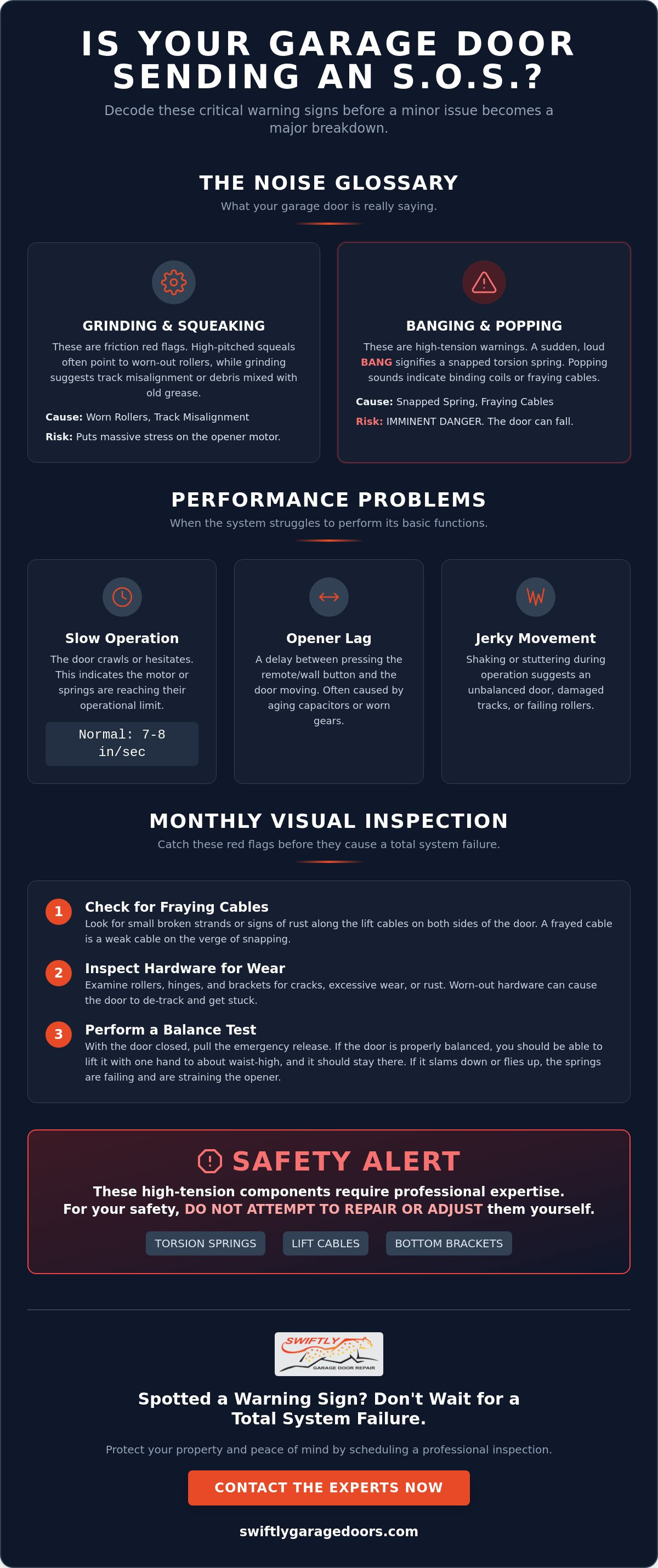
Worn-out rollers are often the source of those annoying high-pitched squeals. As the bearings inside the rollers fail, they stop spinning freely and start sliding, which puts massive stress on the opener. Grinding sounds are the next level of concern. They act as a primary indicator of track misalignment. In the Phoenix area, fine desert dust settles into the tracks and creates an abrasive paste when mixed with old grease. This accelerates wear on every moving part. If you notice these friction red flags, a professional Garage Door Repair can determine if you need a simple part replacement or a full system realignment to restore quiet operation.
Banging and Popping: The High-Tension Warnings
A sudden, violent bang that sounds like a shotgun blast is a classic sign of a snapped torsion spring. These springs hold immense energy and are essential for lifting the heavy weight of the door. If one breaks, the door becomes a dead weight that can crush anything beneath it. Popping sounds during a cycle often indicate that coils are binding or cables are starting to fray under the strain. These are critical warning signs garage door needs repair that demand immediate attention. If you hear these high-tension warnings, stay away from the door. Don't touch the springs, cables, or bottom brackets, as these are "no-go" zones for DIY attempts.
Changes in Speed and Response: When the System Struggles
A healthy garage door operates with a predictable rhythm. You press the button, and the motor responds instantly, moving the panels at a steady pace of about seven to eight inches per second. If your door begins to crawl or pauses for several seconds before moving, you're looking at clear warning signs garage door needs repair. This hesitation isn't just a minor annoyance. It's the system's way of telling you the motor or the springs are reaching their limit.
In the Phoenix area, temperatures inside a closed garage can easily exceed 130 degrees. This extreme heat doesn't just make the space uncomfortable; it actively degrades the circuit boards inside your opener. Heat also dries out the lubricants on the tracks and rollers, creating friction that forces the motor to work twice as hard. If you notice the door hesitating or moving slower during the peak of the day, it's a sign of environmental stress that can lead to a sudden burnout.
Slow Response Times and Opener Lag
Lagging response usually starts with the communication between your remote and the motor. Check your batteries first, but if the wall switch also shows a delay, the issue is likely internal. Aging capacitors are often the culprit. These components provide the initial jolt of energy needed to kickstart the motor. When they weaken, the door might hum or vibrate before finally starting its cycle. Ignoring this puts unnecessary strain on the drive belt or chain, which can lead to a snapped drive assembly. Worn-out plastic gears inside the motor housing can also cause the door to move at half-speed as they lose their grip on the drive shaft.
Jerking and Shaking During Operation
Jerky movements are a major safety hazard. A door that moves in fits and starts often suffers from loose mounting hardware or a track that has shifted out of alignment. Even a single bent section in the track can cause the entire system to shudder, which increases the risk of off-track emergencies. You can perform The Balance and Safety Test to see if the door stays in place when disconnected from the opener. If the door falls or shoots upward when you release the handle, the tension is dangerously incorrect. Don't wait for the system to seize completely. If your door is shaking or moving sluggishly, a professional Broken Garage Door Repair can prevent a total mechanical failure and keep your family safe.
Visual Red Flags: Hardware Wear and Tear You Can't Ignore
A simple monthly walk-around is your best defense against a sudden mechanical failure. Start with the door fully closed. Walk along the interior and inspect the hardware from top to bottom. Check the vertical and horizontal tracks for any obvious bends, deep dents, or gaps where the rail should meet the wall. Even a minor misalignment can cause the rollers to bind, which forces the opener to strain. In the Phoenix area, the intense summer heat causes metal components to expand and contract, which often loosens the mounting bolts over time. If you see hardware that looks loose or shifted, these are critical warning signs garage door needs repair before the system seizes up completely.
Pay close attention to the hinges and rollers. Hinges should be flat against the door panels without any visible cracks in the metal. Rollers should sit squarely in the track and spin without wobbling. If you notice black, greasy residue dripping from the rollers, the internal bearings are likely failing. This isn't just a mess; it's a sign that the roller will soon lock up, which can pull the door off its tracks. Catching these visual cues early prevents a minor maintenance task from turning into a high-stakes emergency repair.
The Danger of Frayed or Snapped Cables
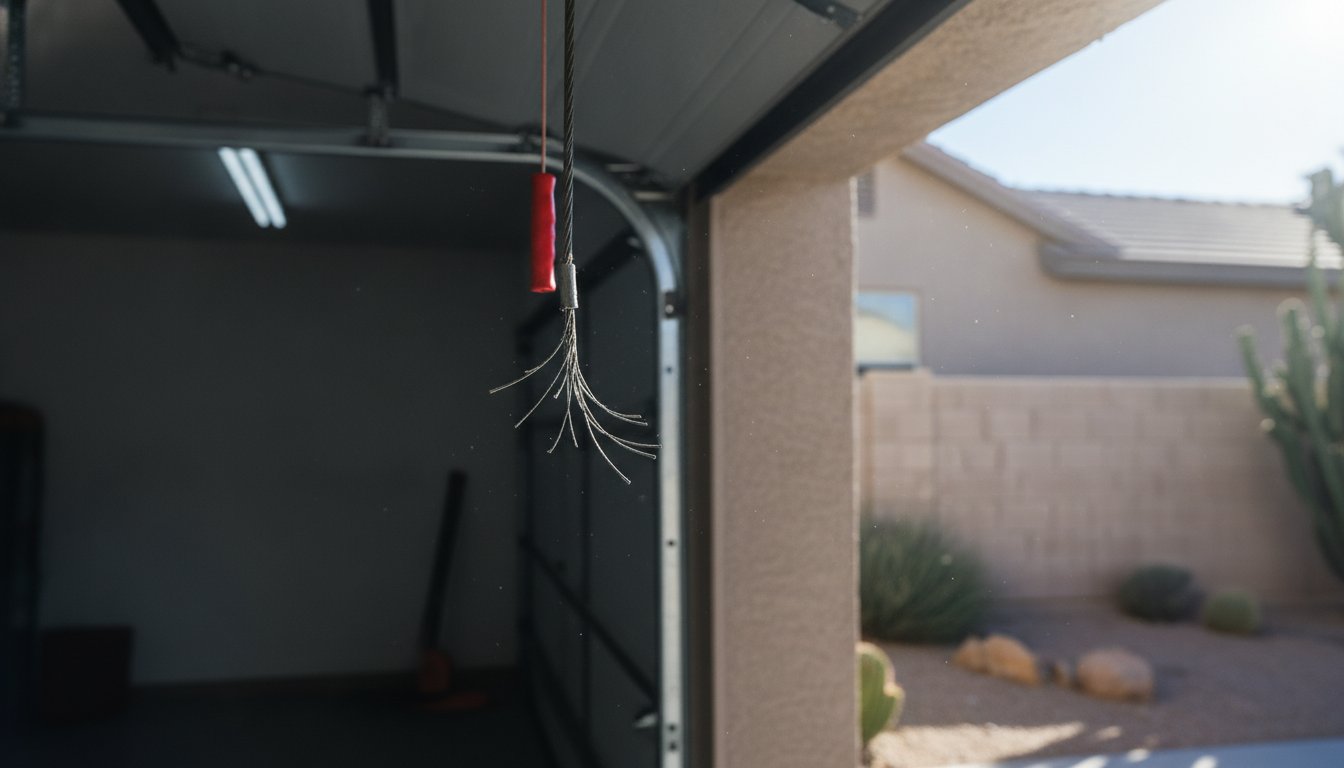
Your garage door cables are responsible for lifting hundreds of pounds under extreme tension. When these steel strands begin to fail, they often look like "peeling" metal. You'll see tiny, sharp wires sticking out from the main cable body. Never touch these with your bare hands. Cable fraying is the precursor to a total door collapse. If a single cable snaps, the door will fall unevenly. This puts massive torque on the door frame and can permanently warp the panels. Inspect the bottom brackets where the cables attach; if you see rust or heavy corrosion, the structural integrity of the lift system is already compromised.
Spring Integrity and Gap Identification
Torsion springs are the most dangerous components of your garage door. You can safely spot a broken garage door spring from a distance by looking at the metal coil mounted above the door header. Follow the "gap rule" for a quick diagnosis. If you see a clear two-inch space in the middle of the spring, the coil has already snapped. Most standard springs have a cycle life of roughly 10,000 openings. In a busy household, that's about five to seven years of use. If your springs look stretched out or show these visible gaps, they are primary warning signs garage door needs repair. Because of the high tension involved, you should never attempt to adjust or replace these yourself.
The Balance and Safety Test: Ensuring Mechanical Harmony
Mechanical harmony is the difference between a garage door that lasts thirty years and one that fails in five. An unbalanced door is the leading cause of premature opener failure. When your system is out of alignment, the motor works much harder than it was designed to, which eventually burns out the internal gears. Many homeowners suffer from the "Heavy Door" illusion. They believe their door is naturally heavy because it's made of steel or wood. In reality, a properly balanced door should feel light enough to lift with one hand. If it feels like a dead weight, your springs are no longer providing the necessary counter-balance. These performance shifts are critical warning signs garage door needs repair.
Safety isn't just about the mechanics; it's about the electronic safeguards required by the UL 325 standard. This regulation requires that every modern opener has at least two independent entrapment protection devices to prevent the door from crushing objects or people. If your door ignores an obstruction or reverses for no reason, your safety system is compromised. Testing these features regularly ensures your home remains a safe environment for children and pets.
Step-by-Step Guide to Testing Door Balance
You can perform a simple balance test in under two minutes. Follow these steps to verify your system's health:
- Step 1: Close the door completely and disconnect the opener by pulling the red emergency release cord.
- Step 2: Manually lift the door about halfway up the tracks.
- Step 3: Carefully let go of the handle. A balanced door will stay in place or move only slightly. If the door crashes to the floor or shoots upward, the spring tension is dangerously incorrect.
- Step 4: Re-engage the opener by pulling the cord toward the door and running a full cycle.
Diagnosing Faulty Safety Sensors
Safety sensors are located at the base of your door tracks. They use an infrared beam to detect obstructions. In the Phoenix area, blowing dust and cobwebs frequently coat the lenses, which breaks the signal and prevents the door from closing. If your door starts to close and then immediately reverses while the opener lights flash, check the sensor units first. Look for a solid green or amber light on both sides. A blinking light usually indicates a misalignment or a wiring fault. If cleaning and realigning the sensors doesn't fix the issue, you may need a professional Garage Door Sensor Replacement to restore full safety functionality. Don't bypass these sensors; they are your primary defense against household accidents.
If your door failed the balance test or the sensors continue to malfunction, it's time to act. Schedule a professional Garage Door Repair today to ensure your system is safe and balanced before a minor issue turns into a total failure.
From Warning Signs to Action: When to Call the Experts
Identifying the warning signs garage door needs repair is only the first step. The real challenge for many homeowners is deciding when to tighten a bolt themselves and when to step back for safety. Minor maintenance, like clearing cobwebs from sensors or applying silicone-based lubricant to the tracks, is a great weekend task. However, mechanical malfunctions require a specialized touch. Attempting to fix complex issues without the right tools often leads to the "parts cannon" approach, where you spend money on components you don't actually need. Professional diagnostics identify the root cause immediately, saving you from wasted time and unnecessary expenses.
Safety must be your top priority. Your garage door system contains several "Do Not Touch" components that carry enough force to cause life-altering injuries. This list includes the high-tension torsion springs, the lift cables, and the bottom brackets. These parts are under immense structural pressure. If a spring or cable snaps during a DIY attempt, the result can be catastrophic. Trusting a professional ensures these high-risk components are handled with the correct winding bars and safety gear, keeping your family out of harm's way.
When It Becomes an Emergency
Some issues can't wait until Monday morning. If your car is trapped inside or your door is hanging precariously by a single cable, you're facing a garage door emergency. A door that's stuck halfway open is a major security risk, inviting intruders or desert pests into your home. Never try to "limp" a broken door along by forcing the motor. This usually bends the tracks or damages the home's structural header, turning a simple repair into a massive construction project. We prioritize same-day service because we know that a functioning garage door is essential for your home's security and your daily schedule.
The Peace of Mind of Professional Maintenance
The best way to handle a repair is to prevent it entirely. A professional tune-up catches subtle warning signs garage door needs repair before they manifest as a loud bang or a total system failure. During a standard inspection, we check every bolt, test the safety reversal system, and ensure the door's balance is perfect. At Swiftly Garage Doors, we believe in transparent estimates and honest diagnostics. We tell you exactly what needs attention now and what can wait. This no-nonsense approach prioritizes your peace of mind and the long-term health of your home. Don't wait for a total breakdown that leaves you stranded. Take control of your home's safety and schedule your inspection today to keep your system running smoothly for years to come.
Protect Your Property with Proactive Care
Ignoring small rattles and slow response times is a risk you don't need to take. By identifying the warning signs garage door needs repair early, you prevent minor mechanical friction from turning into a dangerous structural failure. A healthy door is the result of consistent observation and professional care. Whether it's a snapped spring or a misaligned sensor, acting quickly keeps your home secure and your family safe.
Our team provides 24/7 same-day emergency assistance to ensure you're never locked out. We specialize in high-tension spring and cable repairs, offering expert diagnostics and transparent estimates before any work begins. We value your time and respect your property, providing the reliable service you deserve. Don't wait for a total breakdown to address these red flags. Our technicians are ready to restore your system to peak performance with a steady, expert hand.
Schedule your Phoenix garage door inspection with Swiftly Garage Doors today! You've worked hard for your home; let us help you keep it running perfectly.
Frequently Asked Questions
Is it safe to use my garage door if it's making a loud grinding noise?
No, it's not safe to continue operation. Grinding noises usually indicate metal-on-metal friction caused by misaligned tracks or failing rollers. If you ignore this sound, the added resistance can burn out your opener motor or cause the door to jump the tracks entirely. Stop using the door immediately to prevent a minor mechanical issue from turning into a costly emergency.
Why does my garage door open halfway and then stop?
This behavior is often a sign of a broken spring or a significant balance issue. When a spring loses tension, the opener detects the excessive weight and stops the cycle to prevent the motor from burning out. It can also be caused by obstructed tracks or incorrect travel limit settings. Don't try to force the door open, as this puts dangerous levels of stress on the lift cables.
Can I replace a broken garage door spring myself to save money?
You should never attempt to replace a garage door spring yourself. These components are under extreme tension and can cause life-altering injuries if they snap or slip during a DIY attempt. Professionals use specialized winding bars and safety equipment to manage this high-stakes task safely. The risk to your personal safety far outweighs any potential savings from a DIY repair.
How much does a typical garage door repair cost in the Phoenix area?
Repair costs vary depending on the specific hardware failure and the labor required for the job. While national averages provide a general idea, local factors like Phoenix dust and heat levels impact the specific parts you may need. We prioritize transparency and provide honest estimates after a thorough diagnostic visit so you know exactly what the repair entails before any work begins.
Why is my garage door remote working but the wall button isn't?
This typically points to a wiring fault between the wall console and the opener motor. It could be a loose connection, a short in the wire, or a failed circuit on the opener's logic board. Since the remote still works, the radio receiver is functioning properly, but the physical circuit for the manual button has been broken. A technician can quickly trace the wire to find and fix the break.
What happens if I ignore a frayed garage door cable?
Ignoring a frayed cable leads to a sudden and violent door collapse. Cables are the primary lift lines that support the door's weight. When one snaps, the door falls unevenly, which often warps the panels and damages the tracks. This is one of the most critical warning signs garage door needs repair. Catching it early prevents a simple cable swap from becoming a total system replacement.
How often should I have a professional inspect my garage door system?
You should schedule a professional inspection at least once a year. Regular tune-ups allow a technician to lubricate moving parts, test the safety reversal system, and identify subtle warning signs garage door needs repair. In our harsh desert climate, an annual check-up is essential to prevent heat-related degradation of your opener's electronics and the door's mechanical hardware.
Can the extreme Phoenix heat actually damage my garage door opener?
Yes, the Phoenix heat is a leading cause of opener failure. Temperatures inside a closed garage can easily exceed 130 degrees during the summer. This extreme heat dries out lubricants and causes the sensitive circuit boards inside the motor to overheat and fail. Regular maintenance ensures your lubricants are fresh and your electronics are protected from the environmental stress of the Arizona sun.