Best Garage Door Materials for Arizona: 2026 Expert Recommendations
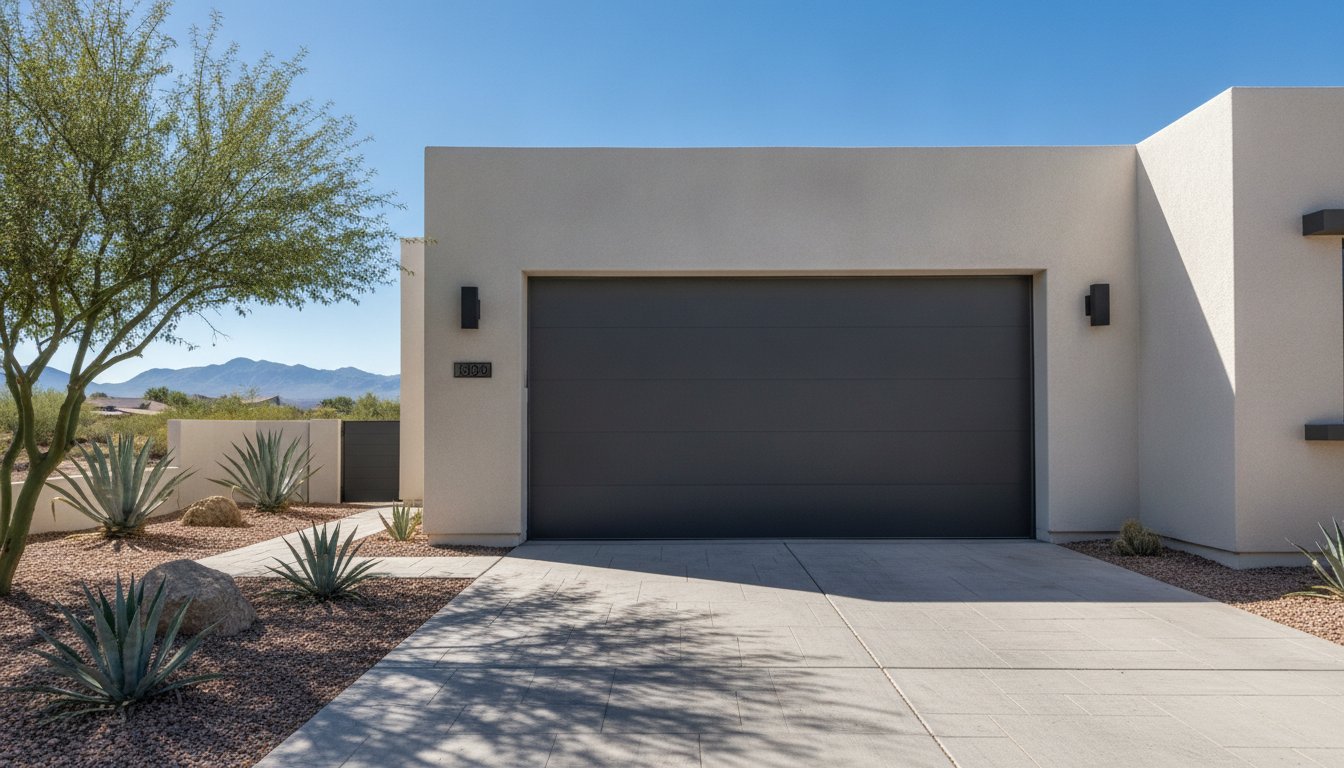
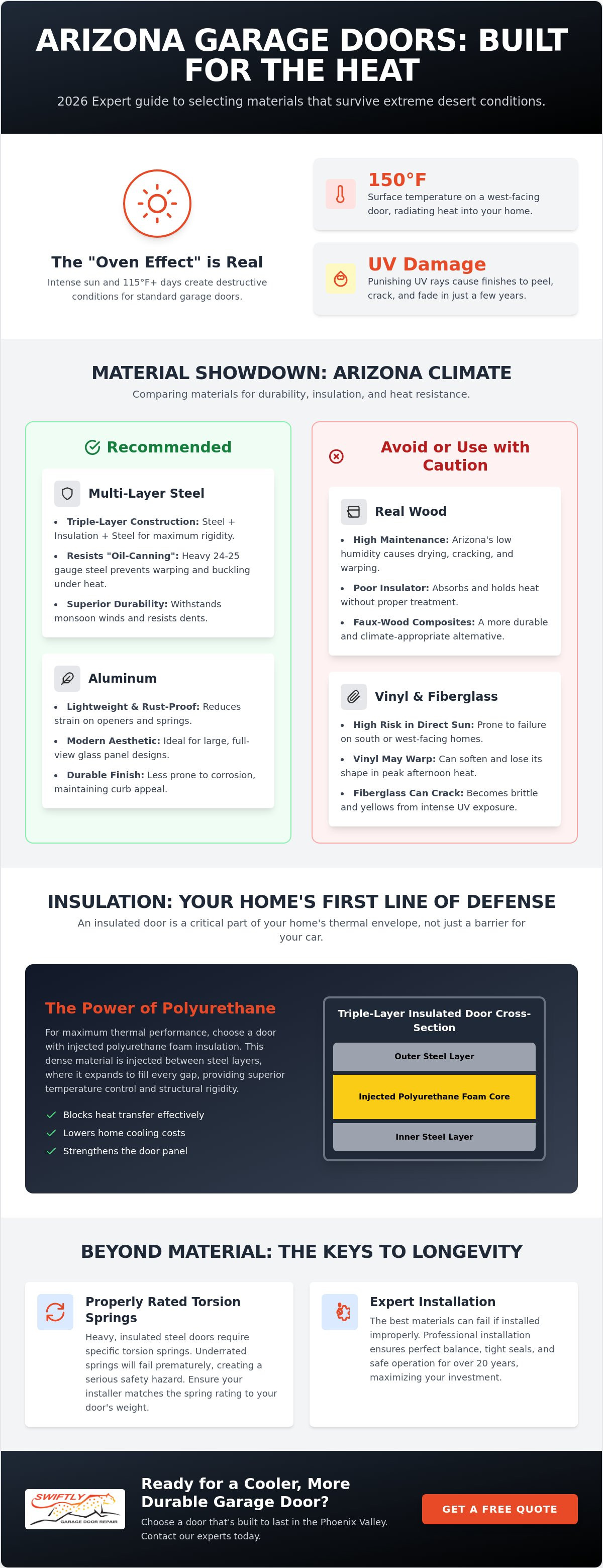
Did you know that a west-facing garage door in Phoenix can reach surface temperatures of 150°F during the summer? When your door absorbs that much heat, it stops being a barrier and starts acting like a giant radiator, baking everything inside your home. Choosing the best garage door materials for Arizona isn't just about finding a style that looks good. It's about selecting a material that can survive punishing UV rays without warping or sending your cooling costs through the roof.
We understand the frustration of watching a beautiful finish peel away after just a few years or feeling a wall of heat every time you open the door to your car. You deserve a setup that stays cool, looks modern, and lasts for over 20 years with minimal work. This guide covers the 2026 expert recommendations for materials that thrive in our desert climate, from high-performance insulated steel to durable faux-wood composites. We'll also show you which common materials to avoid so you don't end up with a melted investment.
Key Takeaways
- Learn how to combat the "oven effect" by choosing materials that withstand surface temperatures reaching 150°F.
- Compare the benefits of multi-layered steel and aluminum for maximum durability and modern curb appeal in the Phoenix Valley.
- Understand why Arizona's low humidity makes real timber a maintenance challenge and how to choose smarter, crack-resistant alternatives.
- Identify the best garage door materials for Arizona by selecting injected polyurethane insulation for superior thermal management and lower energy bills.
- Discover why heavy, high-efficiency doors require specific torsion spring ratings to prevent mechanical failure and ensure long-term safety.
Why Arizona’s Climate Demands a Strategic Choice of Garage Door Materials
Phoenix Valley homes face some of the most extreme environmental stress in the country. In Mesa and Tempe, the heat isn't just uncomfortable; it's destructive to building materials that weren't designed for 115°F ambient temperatures. Choosing the best garage door materials for Arizona is a technical decision that impacts your home's safety and your monthly budget. Standard doors often fail here because they can't handle the "Oven Effect." On a typical July afternoon, a dark-colored door can reach surface temperatures of 150°F. This intense heat causes inferior materials to break down, leading to mechanical failure or a complete loss of curb appeal.
To better understand how these extreme temperatures affect your home, watch this helpful video:
UV radiation is another silent killer for garage doors in the desert. Cheap factory finishes often flake and peel within just three years when exposed to constant Arizona sun. By 2026, the industry has shifted away from basic "builder-grade" doors toward high-thermal resilience systems. These systems are designed to reflect heat rather than absorb it. Understanding the variety of Garage door materials available is the first step in protecting your garage from becoming an unmanageable heat trap. Selecting the right material ensures your door remains functional and attractive for decades.
The Impact of 115°F+ Days on Material Integrity
Extreme heat causes materials to expand and contract rapidly. In thin steel doors, this often results in "oil-canning," where the metal panels pop or buckle under pressure. This isn't just an aesthetic issue; it puts immense strain on your tracks and rollers. While vinyl and fiberglass are popular elsewhere, they are high-risk choices for south-facing garages in Arizona. The UV exposure can cause fiberglass to yellow and crack, while vinyl may soften and warp in the peak afternoon sun. Thermal resilience is the material's ability to maintain structural shape under extreme heat.
Why 2026 Homeowners are Prioritizing Thermal Performance
Your garage is often the largest unconditioned space in your house. If your door absorbs heat, it creates a "heat soak" effect that forces your air conditioner to work harder in adjacent rooms. Modern homeowners now view their garage door as a critical component of their home's thermal envelope. A new garage door installation Phoenix starts with a climate-first assessment to ensure the material can block heat transfer effectively. Choosing the best garage door materials for Arizona ensures that your garage remains a functional space rather than a 130-degree storage unit. High-performance materials provide a reliable barrier that keeps your home cooler and your energy bills lower.
Steel and Aluminum: The Most Durable Options for Phoenix Homes
When evaluating the best garage door materials for Arizona, steel and aluminum lead the market in 2026 for their resilience and versatility. Steel acts as the industry workhorse. It offers unmatched strength but requires heavy insulation to prevent it from becoming a thermal conductor. Aluminum provides a lighter, rust-proof alternative. It's the perfect choice for homeowners wanting large, modern "Full-View" designs that don't strain the opening mechanism or the torsion springs. Both materials offer distinct advantages depending on your home's orientation and architectural style.
Multi-Layer Steel for Maximum Structural Integrity
Don't settle for single-layer doors that lack rigidity. Experts recommend "Triple-Layer" construction, which consists of a layer of steel, a thick core of insulation, and a second interior layer of steel. This design provides the structural integrity needed to handle the high wind-load requirements often seen during monsoon season in Peoria and Glendale. Choosing 24-gauge or 25-gauge steel ensures the panels won't "oil-can" or buckle when surface temperatures soar. While 24-gauge steel is heavier and more rigid, it resists the small dents and dings caused by flying debris better than thinner alternatives.
These doors also feature advanced galvanized coatings. This protection is vital for resisting the fine desert dust that can cause surface corrosion over time. Checking energy performance ratings helps you verify that your steel door will actually keep the heat out. If you notice your current door struggling under the weight of the heat, a professional garage door replacement can restore your home's safety and efficiency.
Aluminum and Glass: The Modern Aesthetic Trend
In 2026, we're seeing a major shift in Scottsdale and Paradise Valley toward "Full-View" aluminum doors. These doors use heavy-duty aluminum frames to support large glass panels without sagging or warping. Selecting the best garage door materials for Arizona often comes down to balancing this modern look with the practical need for heat management. Aluminum naturally dissipates heat faster than solid steel in shaded areas, making it a smart choice for contemporary architecture.
To maintain privacy while enjoying the design, homeowners often choose tinted or frosted tempered glass. This allows natural light into the garage without turning the space into a fishbowl. Modern aluminum frames are often engineered with thermal breaks to further prevent heat transfer. This technology ensures the metal doesn't transfer the afternoon sun's intensity into your home's interior. Aluminum's superior weight-to-strength ratio allows for expansive, 16-foot wide designs that remain easy to operate and maintain for decades.
The Wood Dilemma: Natural Beauty vs. Desert Durability
Many homeowners want to enhance your home's curb appeal with the undeniable warmth of natural timber. Cedar and Mahogany are classic choices that provide a high-end look for luxury properties. However, the reality of real wood in the Phoenix Valley is a constant battle against the elements. When the desert's humidity drops to 5%, real timber begins to shrink and lose its structural bond. This leads to deep cracks, warping, and panels that no longer fit their frames properly. While beautiful, real wood requires a level of commitment that most busy families simply can't maintain.
Fiberglass is sometimes suggested as a middle-ground option, but it often fails in high-UV Arizona zones. The intense solar radiation causes fiberglass to become brittle and yellow within just a few years. It lacks the thermal resilience needed for our climate and often ends up looking aged far sooner than expected. For those researching the best garage door materials for Arizona, the focus in 2026 has shifted toward materials that offer the aesthetic of wood with the durability of modern engineering. You don't have to sacrifice style for performance if you choose the right composite system.
Why Faux-Wood Composites are Outperforming Real Timber
The 2026 solution for the wood look is the faux-wood composite door. These systems are built with a heavy-duty, insulated steel core and finished with molded wood-grain overlays. Because the exterior is a high-tech composite, these doors are immune to the warping, rotting, and splitting issues that plague natural wood. They hold their shape perfectly even when the afternoon sun is at its peak. Composite doors offer the highest ROI for Phoenix homeowners seeking a luxury look without the constant threat of material failure.
Maintenance Requirements for High-UV Environments
A realistic look at upkeep is essential before making an investment. Real wood in Arizona requires professional refinishing every 12 to 18 months to prevent permanent sun damage and bleaching. If you miss a maintenance cycle, the wood can grey and crack beyond repair. This adds a significant recurring cost to the life of the door.
In contrast, faux-wood materials only require an occasional wash with soap and water to maintain their factory finish. Choosing these low-maintenance options is a key strategy for finding affordable garage door repair Phoenix homeowners can count on over the long term. By selecting a material that doesn't break down in the sun, you avoid the expensive cycle of sanding and staining while keeping your home's exterior looking pristine for decades. The best garage door materials for Arizona are those that respect your time as much as your budget.
Maximizing Energy Efficiency with Advanced Insulation Materials
Selecting the best garage door materials for Arizona requires looking past the surface. While steel or aluminum provides the shell, the insulation inside determines your comfort. In 2026, polyurethane-injected foam has become the expert choice over traditional polystyrene. Unlike polystyrene boards that are simply tucked into the panels, polyurethane is injected as a liquid that expands and bonds to the steel. This creates a dense, solid core that improves the door's structural strength while offering nearly double the thermal resistance in the same amount of space.
Paint technology has also taken a massive leap forward. Homeowners often worry that dark-colored doors, like black or deep bronze, will turn their garage into an oven. New reflective coatings now contain specialized pigments that bounce UV rays away from the door surface rather than absorbing them. This allows you to achieve a modern aesthetic without the extreme heat gain usually associated with dark colors in the desert.
Understanding R-Values for the Phoenix Valley
In a desert context, R-value represents the material's resistance to heat flow into your garage. For homes in the Phoenix Valley, an R-12 to R-18 rating is the sweet spot for balancing cost and performance. A door in this range can reduce the interior temperature of your garage by 20 to 30 degrees during the summer. This protection is vital for your home's infrastructure. High heat is a known killer of car batteries and can cause damage to stored items like paint, electronics, and tools. Review our insulated garage door installation Phoenix guide to see how different ratings perform under direct afternoon sun.
The Importance of Thermal Breaks and Perimeter Sealing
High-quality insulation is useless if the door frame itself acts as a bridge for heat. This is why 2026 experts look for doors with a built-in thermal break. A thermal break is a separator that prevents the outer steel skin from touching the inner skin, stopping the "heat soak" from traveling through the door panels. Without this, the interior of your door would be hot to the touch even with thick insulation inside.
Perimeter sealing is the final piece of the puzzle. Side and top seals, along with a heavy-duty bottom rubber, stop "hot air leaks" from entering the garage. A tiny 1/4 inch gap around the edge of your door can allow enough hot air inside to completely negate the benefits of a high-R-value door. If you feel heat radiating from the edges of your current setup, it may be time for a professional upgrade. Contact us for a new garage door installation that prioritizes energy efficiency and long-term durability.
Expert Installation: Ensuring Your Material Choice Lasts
Selecting the best garage door materials for Arizona is a smart first step, but the mechanical system must support that choice. A high-performance door is only as good as the hardware carrying it. If you choose a heavy, triple-layer insulated steel door, your existing torsion springs might not be up to the task. These springs provide the necessary lift for the entire system. They must be perfectly matched to the door's specific weight to ensure smooth, safe operation every time you press the button.
Professional calibration is what prevents premature garage door spring repair Phoenix homeowners often face after a DIY or cut-rate installation. When a door is out of balance by even a few pounds, it puts excessive strain on the opener and the tracks. Expert installation also protects your investment by preserving manufacturer warranties. Most high-end material manufacturers require certified installation to honor their long-term performance guarantees. At Swiftly Garage Doors, we prioritize honest diagnostics. We'll tell you if a simple repair is enough or if a full replacement is the safer, more cost-effective path for your home.
Material Weight and System Longevity
Upgrading to a heavier, more efficient material without adjusting your opener and springs is a recipe for mechanical failure. Aluminum and glass doors require extreme precision during the leveling process to prevent the large panels from binding in the tracks. This technical accuracy ensures your system remains quiet and reliable for its entire lifespan. Check our garage door replacement Phoenix checklist for a full breakdown of the components that need to be updated alongside your new door panels.
Getting Your Transparent Estimate from Swiftly Garage Doors
We don't believe in guesswork. During a material consultation, we use heat mapping to see exactly how much solar radiation your garage absorbs throughout the day. This data helps us recommend the best garage door materials for Arizona that fit your home's specific orientation and style. We provide upfront, no-nonsense quotes so you know the exact cost before any work begins. You won't find hidden fees or surprise add-ons in our process. Schedule your Arizona-ready garage door consultation with Swiftly Garage Doors today.
Protect Your Home With a Desert-Ready Upgrade
Selecting the best garage door materials for Arizona is a vital step toward securing your home's comfort and long-term value. We've explored how high-performance insulated steel and modern faux-wood composites effectively block the 150°F surface heat that destroys standard doors. A great material only performs if it's backed by professional calibration and high-quality thermal breaks. These components work together to protect your car's battery and reduce the cooling load on your entire house.
Swiftly Garage Doors specializes in high-thermal resilience systems built specifically for the Phoenix climate. We offer 24/7 emergency support for all material types and serve neighbors in Phoenix, Mesa, Scottsdale, and the entire Valley. You can count on us for honest diagnostics and technical precision. Take the first step toward a cooler garage and better curb appeal today. It's time to stop letting the desert sun dictate your indoor temperature.
Get a Free, Honest Estimate on Your New Arizona-Ready Garage Door
Our team is ready to help you find the perfect balance of style and desert durability.
Frequently Asked Questions
What is the most durable garage door material for the Phoenix heat?
Polyurethane-insulated steel is the most durable material for the Phoenix heat. It provides the structural strength needed to resist wind loads while the injected foam core prevents the metal from buckling when surface temperatures hit 150°F. Unlike vinyl or fiberglass, high-quality steel won't become brittle or yellow under intense UV exposure. It's the best garage door materials for Arizona choice for homeowners who want a door that lasts 20 to 30 years.
Is an insulated garage door worth it in Arizona if my garage isn't air-conditioned?
Yes, an insulated door is essential even if your garage isn't air-conditioned. It acts as a thermal barrier that keeps the interior 20 to 30 degrees cooler by preventing "heat soak" from the afternoon sun. This protection prevents your garage from becoming a giant radiator that bakes your cars. It also helps extend the life of your car's battery and protects stored items from heat damage.
Will a black garage door make my house hotter in the summer?
A standard black door will absorb more heat, but 2026 technology uses reflective pigments to mitigate this. When choosing the best garage door materials for Arizona in dark colors, ensure they feature UV-resistant factory finishes and polyurethane insulation. These modern coatings bounce solar radiation away from the surface. This allows you to enjoy a modern aesthetic without significantly increasing your home's cooling load.
How often do I need to maintain a wood-look garage door in the desert?
Real wood requires professional refinishing every 12 to 18 months in the desert's low humidity to prevent cracking. However, modern faux-wood composites only need an occasional wash with soap and water. These composite materials provide the luxury look of timber without the risk of warping or losing their structural bond in 5% humidity. They are the ideal low-maintenance solution for a high-end desert home.
What R-value should I look for in an Arizona garage door?
You should look for an R-value between R-12 and R-18.4 for an attached garage in Arizona. This range provides the optimal resistance to heat flow into your home during the summer. For less sun-exposed openings, an R-value of R-6 to R-9 may be acceptable. Higher ratings offer better long-term energy savings and help maintain a much more manageable temperature inside the garage space.
Can the Arizona sun warp a steel garage door?
Direct sun can cause thin, uninsulated steel doors to "oil-can" or pop due to rapid thermal expansion. Choosing a 24-gauge or 25-gauge multi-layer steel door prevents this structural issue. The internal polyurethane insulation provides extra rigidity that helps the panels maintain their shape. This ensures the door stays aligned in its tracks even when surface temperatures reach extreme levels during the peak of July.
Are aluminum and glass garage doors safe for home security?
Aluminum and glass doors are very safe when equipped with tempered or frosted glass. Tempered glass is significantly harder to break than standard glass and provides a strong barrier against intruders. The heavy-duty aluminum frames are engineered for maximum strength and weight-to-strength ratios. This provides a secure opening that matches the durability of solid steel options while offering a sleek, modern look for Valley homes.
Does a new garage door increase home resale value in Phoenix?
A new garage door offers one of the highest returns on investment for Phoenix homeowners. According to 2026 industry data, a new door can recoup up to 194% of its cost at resale. It significantly boosts curb appeal while signaling to potential buyers that the home is energy-efficient and prepared for the local climate. It's a practical upgrade that pays for itself when you sell.