New Garage Door Opener Installation: The Complete 2026 Guide for Phoenix Homeowners
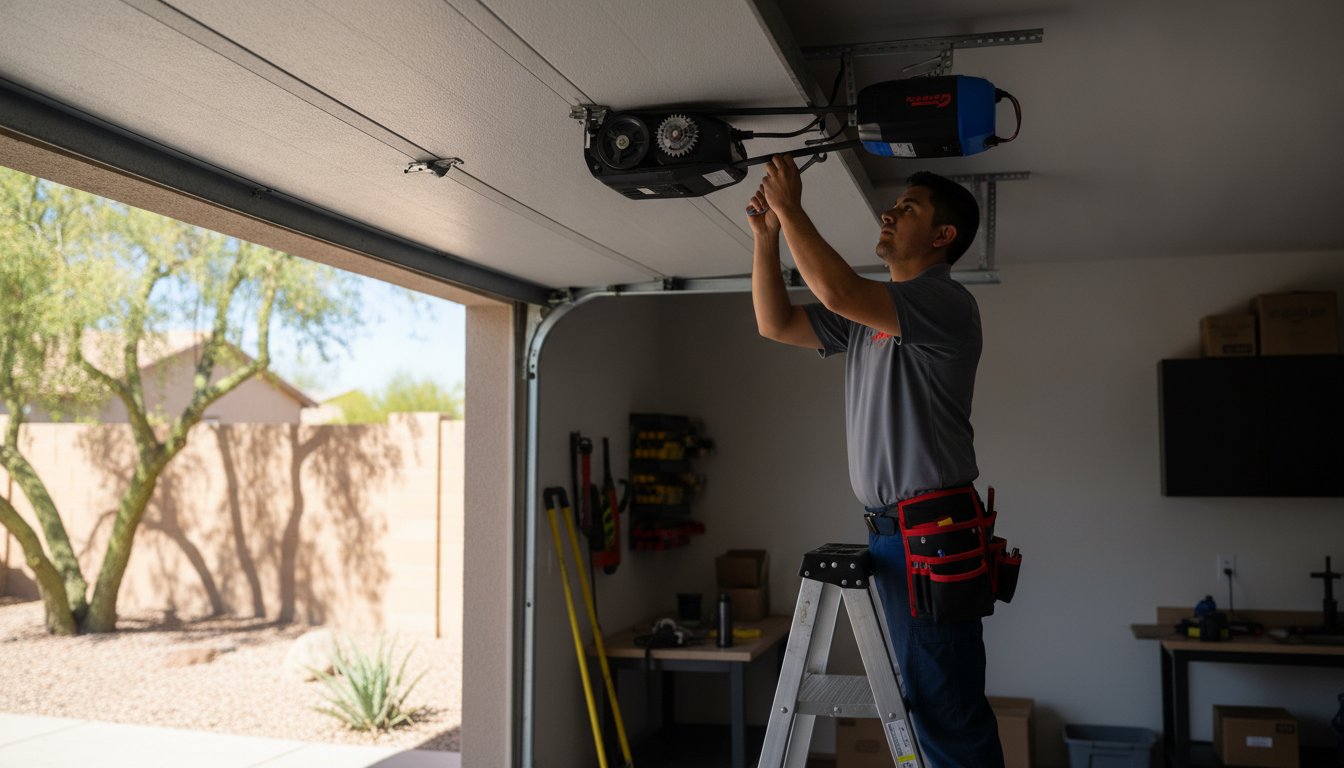
Is your garage door opener actually built to survive another 115-degree Phoenix summer, or is it just waiting for the worst possible moment to quit? A new garage door opener installation in the Valley isn't just a simple motor swap. It's a system-wide recalibration that's essential for surviving the desert heat and keeping your home secure.
We know how frustrating it is when your remote fails during a heatwave or the motor makes enough noise to wake the neighbors. You shouldn't have to worry about outdated rolling code technology or whether your door will actually open when you're in a rush. Discover how to choose the right equipment for the Arizona climate and why professional installation ensures your system remains quiet and reliable for years to come. This guide previews the latest 2026 Matter smart home standards, explains local Phoenix building codes, and shows you how to achieve the peace of mind that comes with a modern, warrantied system.
Key Takeaways
- Learn why garage door openers older than 15 years are safety risks and how to distinguish mechanical fatigue from normal operational noise.
- Compare belt, chain, and screw drive systems to find the perfect balance between durability and quiet operation for the Arizona climate.
- Discover how a new garage door opener installation provides 2026 smart features like Matter compatibility and real-time video monitoring.
- Understand the critical risks of DIY assembly and why professional mounting ensures your motor is perfectly centered for long-term reliability.
- Identify the signs that your current system needs a replacement and learn how to secure an honest estimate without hidden fees.
When to Prioritize a New Garage Door Opener Installation
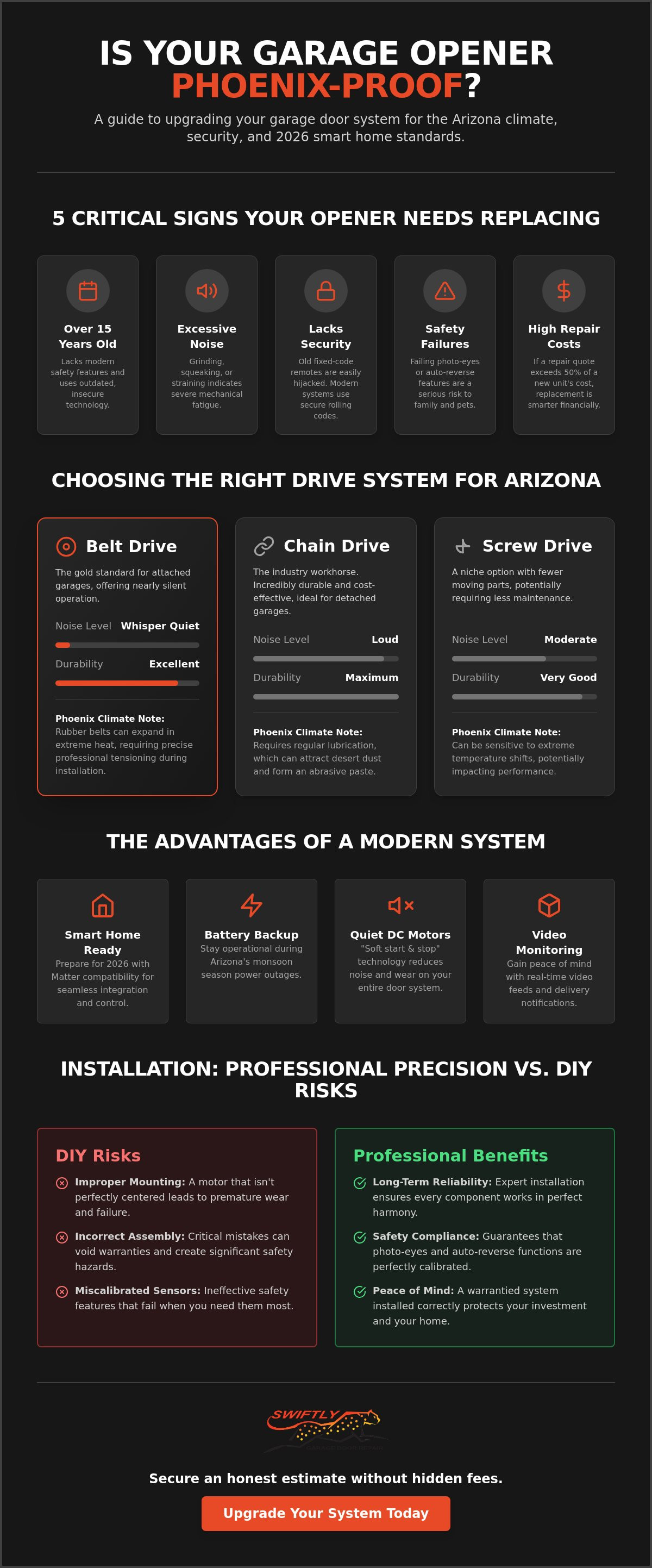
Deciding between a repair and a replacement is a common dilemma for Phoenix homeowners. While many components can be fixed, there comes a point where an old motor becomes a liability rather than an asset. If your opener is older than 15 years, it lacks modern safety features that are now standard. Technology has moved fast. Older units often use fixed codes that are easy for tech-savvy burglars to duplicate. A modern system uses rolling code technology, making it nearly impossible for anyone to hijack your signal.
The "Noise Factor" is your most reliable diagnostic tool. Every motor makes some noise, but you should listen for changes in pitch or volume. Grinding, squeaking, or a heavy straining sound suggests that the internal gears are failing. These sounds often indicate mechanical fatigue. In the extreme Arizona heat, a struggling motor will overheat quickly. This leads to intermittent failures, especially during the peak of summer when the garage is already a furnace. If you notice these sounds, a new garage door opener installation is usually the safest path forward.
Safety compliance is another critical factor. Modern systems must include photo-eye sensors and an auto-reverse feature that triggers if the door hits an obstruction. If your current system doesn't have these, or if they work inconsistently, you're risking injury to pets or family members. When the cost of frequent service calls starts to climb, investing in a new system becomes the smarter financial move. If a repair quote exceeds 50% of the cost of a new unit, replacement is the logical choice to ensure long-term reliability.
Signs Your Current Opener is Failing
You might notice your remotes or wall buttons only work half the time. This intermittent response often points to a failing logic board rather than just a dead battery. You should also look for visible vibration in the motor housing or the rail during operation. If the door starts to close and then suddenly reverses for no apparent reason, it could be a sensor issue or a sign that the motor can no longer handle the door's weight. These issues often require a professional diagnostic to determine if a simple fix or a full new garage door opener installation is necessary.
The Benefits of Modernizing Your System
Modern openers utilize DC motors, which are significantly quieter than the AC motors used in older models. They provide a "soft" start and stop, which reduces wear on the door's tracks and springs. Different Garage door opener drive types now offer better efficiency and security than the heavy units of the past. Additionally, 2026 standards often incorporate integrated battery backups. This ensures your door remains operational during the sudden power outages common during Arizona's monsoon season, keeping your home accessible when you need it most.
Comparing Drive Types: Belt, Chain, and Screw Drive Systems
Choosing the right drive system is the most important decision you'll make during a new garage door opener installation. Every model must adhere to Federal safety regulations for garage door openers, but the internal mechanics determine how long the unit lasts in our specific environment. Chain drives remain the industry workhorse. They use a metal chain to pull the door along the track. They are incredibly durable and cost-effective, making them the ideal choice for detached garages where noise isn't a primary concern. However, the metal-on-metal contact creates significant vibration that can echo through a home.
Belt drive systems are the gold standard for attached garages. Instead of a chain, they use a steel-reinforced rubber or Kevlar belt. This results in nearly silent operation. If your bedroom is located directly above or next to the garage, a belt drive is the only logical choice. Screw drive systems are a more niche option, utilizing a threaded steel rod to move the trolley. They have fewer moving parts, which theoretically means less maintenance, but they can be sensitive to extreme temperature shifts. For homeowners with high-lift doors or limited ceiling clearance, wall-mount jackshaft openers provide a specialized solution by mounting directly to the torsion bar, freeing up valuable overhead space.
Performance in the Phoenix Climate
The Valley's climate presents unique challenges for mechanical equipment. Intense summer heat can cause rubber belts to expand slightly, requiring precise tension adjustments during a new garage door opener installation. Dust is another factor. Chain and screw drives require regular lubrication, which can unfortunately attract desert grit and create a grinding paste that wears down components. Modern DC motors are far superior to older AC models in these conditions. They run cooler, handle voltage fluctuations better, and offer more consistent torque when the garage temperature exceeds 120 degrees.
Horsepower and Lifting Capacity
Selecting the correct horsepower is about balance, not just raw strength. A 1/2 HP motor is sufficient for most standard aluminum doors, while a 3/4 HP motor is necessary for heavy wood or insulated steel doors. Over-powering a light door can actually cause the motor to jerk the tracks, leading to premature hardware failure. Look for models featuring soft start and stop technology. This feature slows the door down at the beginning and end of its cycle, which significantly reduces the physical shock to your hinges and rollers. If you're unsure which drive type fits your specific door weight, our team can provide a professional assessment to ensure long-term performance.
Smart Features and Security Upgrades for 2026
In 2026, a new garage door opener installation is as much about software as it is about hardware. Phoenix homeowners are moving away from "dumb" motors in favor of units that integrate directly with their smart home ecosystems. The latest models have adopted the Matter smart home standard as of June 15, 2026. This allows your opener to communicate natively with Apple Home, Amazon Alexa, and Google Home without the need for extra hubs. This connectivity is no longer just a luxury. It’s a vital tool for managing home security and energy efficiency in the desert.
The extreme Arizona sun can wreak havoc on older electronic components. High-end 2026 openers feature improved thermal management for their logic boards. This prevents the common issue of the system locking up when garage temperatures exceed 120 degrees. Beyond temperature resistance, these units offer features that simplify your life. You can set a schedule to ensure the door automatically closes at 9:00 PM every night. Integrated cameras now provide a 160-degree field of view with night vision. This allows you to monitor your home entry point in real-time from any location. Many homeowners also opt for Amazon Key integration. This allows delivery drivers to place packages securely inside your garage, preventing the "porch pirate" issues common in high-traffic Valley neighborhoods.
Remote Access and Smartphone Control
Managing your home is easier when you can grant access from your phone. You can set up multi-user access for family members or service providers, giving them temporary "keys" that expire. If you find your garage door is not responding to remote signals, the smartphone app often serves as a reliable backup. These apps provide real-time alerts. You’ll know the moment your door opens, whether it’s your kids coming home from school or an unexpected entry. The latest 2026 models even incorporate AI-driven anomaly detection. This system sends an alert if the door opens at an unusual time, adding an extra layer of proactive protection.
Enhanced Security Protocols
Security has evolved beyond simple remotes. All major platforms now utilize end-to-end encryption for communication between the app and the motor. This prevents hackers from intercepting your signal. When you invest in a new garage door opener installation, you can also include automatic deadbolt locks. These locks engage every time the door closes, making it physically impossible to "fish" the emergency release cord from the outside. Every installation must meet federal safety standards for garage door openers to protect your family. Modern units also include motion-activated LED lighting. These systems flood the garage with light the moment you walk in, ensuring you never have to navigate a dark space at night.
The Professional Installation Process vs. DIY Risks
Many DIY videos claim you can finish a new garage door opener installation in just a few hours. This is often dangerous advice. A professional installation isn't just about bolting a motor to the ceiling; it's a comprehensive safety audit of your entire home entry system. We begin every project with a pre-installation inspection. This involves checking every track for alignment and every roller for wear. If your tracks are bent or your rollers are seized, a brand-new motor will burn out within months trying to overcome that unnecessary friction.
Precision is the difference between a system that lasts twenty years and one that fails in two. We ensure the motor is perfectly centered and leveled. This prevents the trolley from binding on the rail. In the intense Phoenix heat, where metal components expand and contract daily, even a minor misalignment becomes a major mechanical failure. We also calibrate the limit and force settings. These digital instructions tell the opener exactly how much power to use. If these aren't set correctly, the door might not close fully or, worse, it might fail to reverse when it hits an obstruction.
Why Door Balance is Non-Negotiable
A common misconception is that the opener does the heavy lifting. In reality, the springs are the muscles of the system. The motor is simply the guide. If your door is unbalanced, it puts immense strain on the motor's internal gear kit. In our desert climate, where lubrication can thin out, an unbalanced door is a recipe for a snapped belt or a stripped gear. You must ensure a garage door spring repair Phoenix is completed before a new opener is mounted. A healthy door should stay in place when opened halfway by hand. If it slams down or shoots up, your opener will fail prematurely.
Common DIY Pitfalls to Avoid
- Structural Damage: DIYers often fail to secure mounting brackets into the structural joists. This leads to the motor tearing away from the ceiling, causing thousands in structural damage.
- Wiring Errors: Incorrect wiring of safety sensors leads to intermittent operation. If the garage door sensor replacement isn't integrated properly, the door may refuse to close during the brightest parts of the day.
- Safety Failures: Failure to properly calibrate the auto-reverse mechanism is a massive liability. A professional technician verifies these safety features using standardized tests to protect your family and pets.
Don't risk your safety or your home's structure on a weekend project. For a reliable, warrantied new garage door installation, trust the experts who understand the unique demands of the Valley climate. We provide the technical proficiency needed to ensure your system operates flawlessly even in 115-degree weather.
Why Swiftly Garage Doors is the Valley Choice for Installation
Choosing a service provider for a new garage door opener installation involves more than just finding the lowest bidder. It requires finding a partner who understands the high stakes of home security and the specific mechanical challenges of the Arizona climate. At Swiftly Garage Doors, we lead with honest diagnostics. If your current unit can be safely and reliably repaired, we'll tell you. We only recommend a full replacement when your existing system becomes a safety liability or when the cost of repair no longer makes financial sense.
Transparency is the foundation of our business. You'll never encounter hidden fees for mounting hardware, rail extensions, or sensor alignment. Our estimates are comprehensive and clear from the start. We also respect your time. Because a broken garage door is often an urgent security issue, we offer same-day service to restore your home’s protection as quickly as possible. Every installation we perform is backed by a comprehensive warranty that covers both the high-quality unit and our professional labor. You get peace of mind knowing that your investment is protected by local experts who stand behind their work.
Our Commitment to the Phoenix Community
Our technicians aren't just general laborers. They are specialists trained to handle the unique heat and dust challenges found throughout the Valley. We know how 115-degree temperatures affect motor logic boards and how desert grit can degrade drive belts. This local expertise ensures your system is calibrated to survive the elements. We also provide 24/7 availability for emergency garage door repair Phoenix. Whether you're in a quiet neighborhood in Peoria or a busy street in Mesa, we arrive prepared to solve the problem immediately. This level of neighborly accountability is something big-box retailers simply can't match.
Next Steps for Your Installation
Getting started is straightforward. You can schedule a same-day diagnostic appointment with a quick call or a few clicks. When we visit your home in Mesa, Tempe, or Peoria, we perform a total system check. This includes inspecting your springs, cables, and tracks to ensure they're ready for a new motor. We provide all the information you need upfront so you can make an informed decision for your home. Don't let a failing motor compromise your safety or convenience any longer. Book your new garage door opener installation with Swiftly Garage Doors today!
Modernize Your Phoenix Home Entry System
Your garage door is the most frequent entry point for your family. Upgrading to a modern system isn't just a luxury; it's a vital security measure for 2026. You've seen how the right drive type and Matter-compliant smart features can transform your daily routine. By choosing professional calibration over risky DIY methods, you protect your home's structure and ensure your sensors operate flawlessly in the desert heat.
Don't wait for a total mechanical failure to leave your car trapped or your home exposed. A new garage door opener installation provides the quiet, dependable performance needed to survive another Arizona summer. Swiftly Garage Doors offers expert technicians across Phoenix, Mesa, and Scottsdale, providing honest diagnostics and 24/7 same-day emergency service. We take the guesswork out of home maintenance with highly-rated workmanship you can trust.
Get a Transparent Estimate for Your New Opener Installation
Take control of your home security today. Our team is standing by to ensure your new system is installed with the precision and care your property deserves.
Frequently Asked Questions
How much does a new garage door opener installation cost in Phoenix?
Installation costs vary based on the motor's horsepower, the drive system you choose, and any integrated smart features. We provide transparent estimates upfront to ensure you aren't surprised by hidden fees for mounting hardware or sensor alignment. While local market conditions influence the price of the unit, a professional installation is a long-term investment that protects your warranty and ensures your system meets all local building codes.
How long does it take for a professional to install a new opener?
A professional new garage door opener installation typically takes between two and four hours. This timeframe includes removing your old equipment, securing the new motor to the ceiling joists, and calibrating the safety sensors. If you're adding advanced smart home features or AI-driven cameras, the setup might take slightly longer to ensure your Wi-Fi connection is stable and the app is fully synced.
Can I use my old tracks and sensors with a new garage door opener?
You should always use the new tracks and sensors that come with your unit. Reusing old components is a significant risk that leads to mechanical binding and intermittent safety failures. Modern openers are engineered to work with specific rail tensions and sensor frequencies. Mixing old hardware with a new motor often voids the manufacturer’s warranty and can leave your home’s primary entry point vulnerable to malfunctions.
What is the quietest garage door opener for an attached garage?
Belt drive openers equipped with DC motors are the quietest option for attached garages. These systems replace the heavy metal chain with a steel-reinforced rubber belt, which eliminates the vibration that usually rattles through your home’s walls. When combined with soft start and stop technology, the operation is nearly silent. It's the perfect solution for homes where a bedroom is located directly above or next to the garage.
Do I need to replace my garage door springs when I get a new opener?
You don't always need to replace your springs, but they must be in perfect balance. An opener's job is to guide the door, not lift its entire weight. If your springs are worn, your new motor will burn out prematurely from the strain. We always perform a balance test before starting a new garage door opener installation to ensure your springs are providing the necessary lift for a smooth operation.
Is a battery backup required for garage door openers in Arizona?
Arizona law doesn't legally mandate battery backups, but they are highly recommended for the Phoenix climate. Monsoon storms and summer grid strain frequently cause power outages that can leave you locked out of your house. A battery backup ensures your door remains operational even when the power is down. It's a critical safety feature that prevents you from having to manually lift a heavy door in extreme heat.
How do I know if my garage door opener motor is burned out?
A burned-out motor often produces a loud humming sound without any door movement or a distinct electrical burning smell. If the unit has power but the trolley doesn't move when you hit the button, the internal gears or the capacitor have likely failed. Total silence when you press the remote can also indicate a blown logic board, which is a common result of desert power surges during storm season.
What is the best garage door opener brand for high-heat environments?
Look for brands that utilize DC motors and prioritize thermal management for their electronics. Manufacturers like LiftMaster and Genie offer models specifically designed to withstand extreme temperatures without the logic board locking up. These units feature reinforced housings and internal components that resist the mechanical fatigue common in Phoenix garages, where internal temperatures can easily exceed 120 degrees during the summer.